Fai
Spazio
A learning-by-doing service for young people and a participatory platform for Milan, designed with Argòt
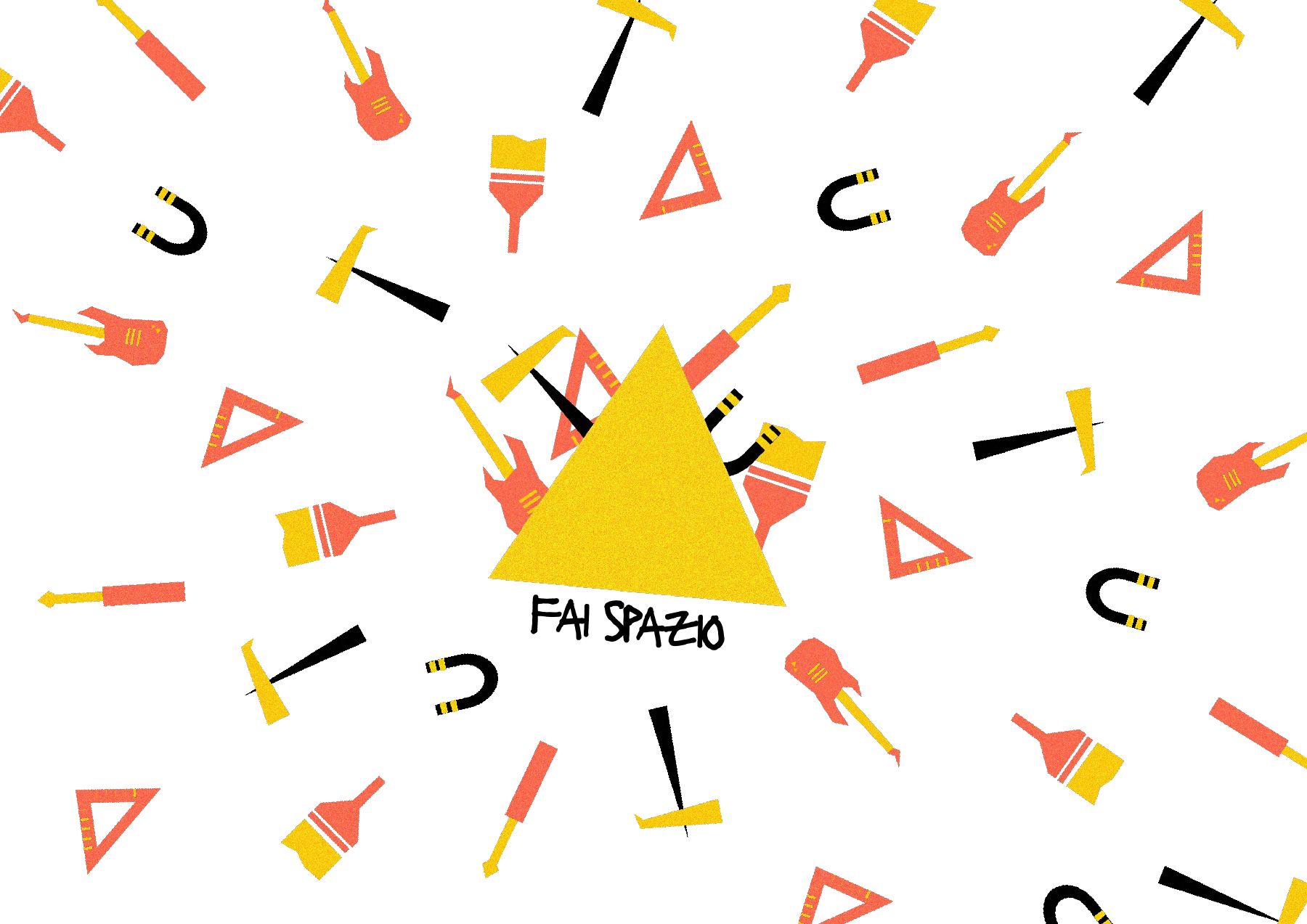
A service that empowers communities through learning-by-doing practices, fostering their direct involvement in the creation and implementation of projects through a bottom-up approach.
1
Background researchLearning & participation
1.1Learning in youth associations
A fragmented landscape.
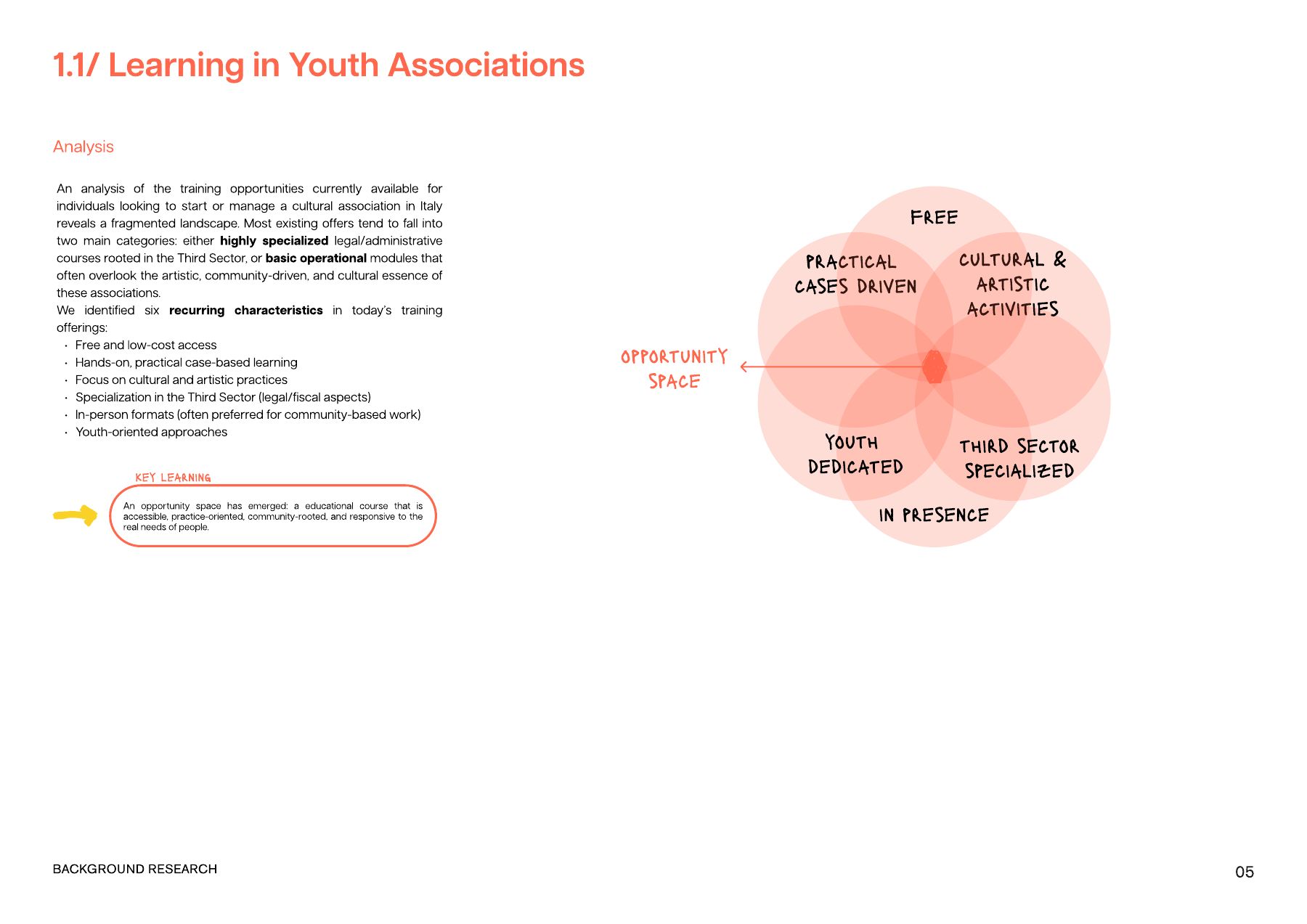
Training for people who want to start or manage a cultural association in Italy is fragmented. Most offers are either highly specialised legal and administrative courses rooted in the Third Sector, or basic operational modules that overlook the artistic, community-driven and cultural essence of these associations.
An opportunity space emerged: a course that is accessible, practice-oriented, community-rooted and responsive to people’s real needs.
Six recurring traits of today’s offer
- Free and low-cost access
- Hands-on, practical case-based learning
- Focus on cultural and artistic practice
- Specialisation in the Third Sector (legal and fiscal aspects)
- In-person formats, often preferred for community work
- Youth-oriented approaches
1.2Participatory processes
From Decidim in Barcelona to Milano Attiva.
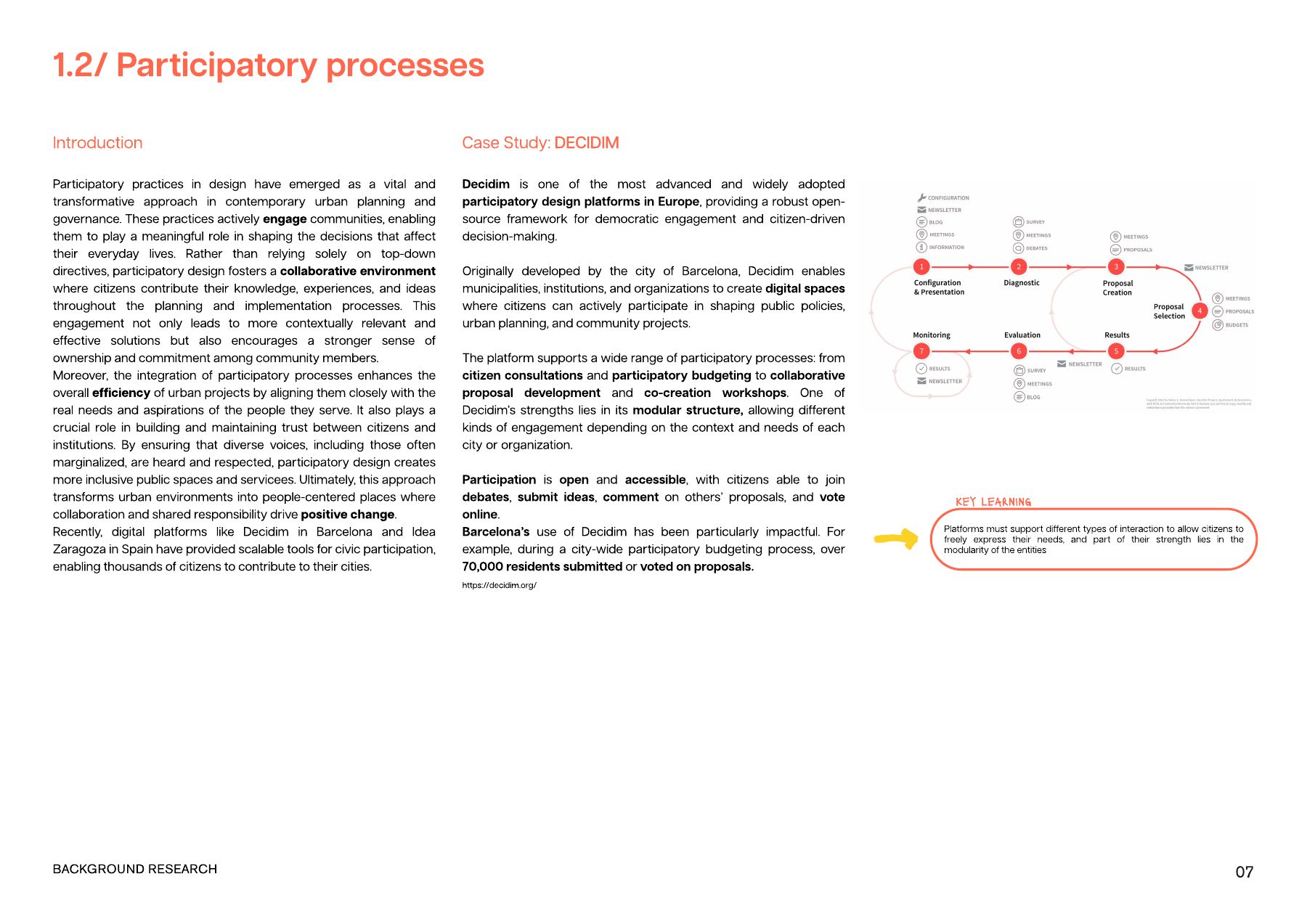
Participatory design lets communities play a real role in decisions that shape their everyday lives: solutions become more relevant, people feel ownership, and trust between citizens and institutions grows. Platforms like Decidim in Barcelona show how digital tools can scale civic participation to thousands of citizens — from consultations to participatory budgeting.
In Milan, Milano Attiva (launched in 2025) is an open call for associations and informal groups to propose care and regeneration of the city’s common goods. It showed us what the city needs to evaluate a proposal — but also its limits: it is not designed for individual citizens, it is hard to use for less digitally skilled people, and it only opens in set periods.
1.3Journeys & references
How young people meet associations today.
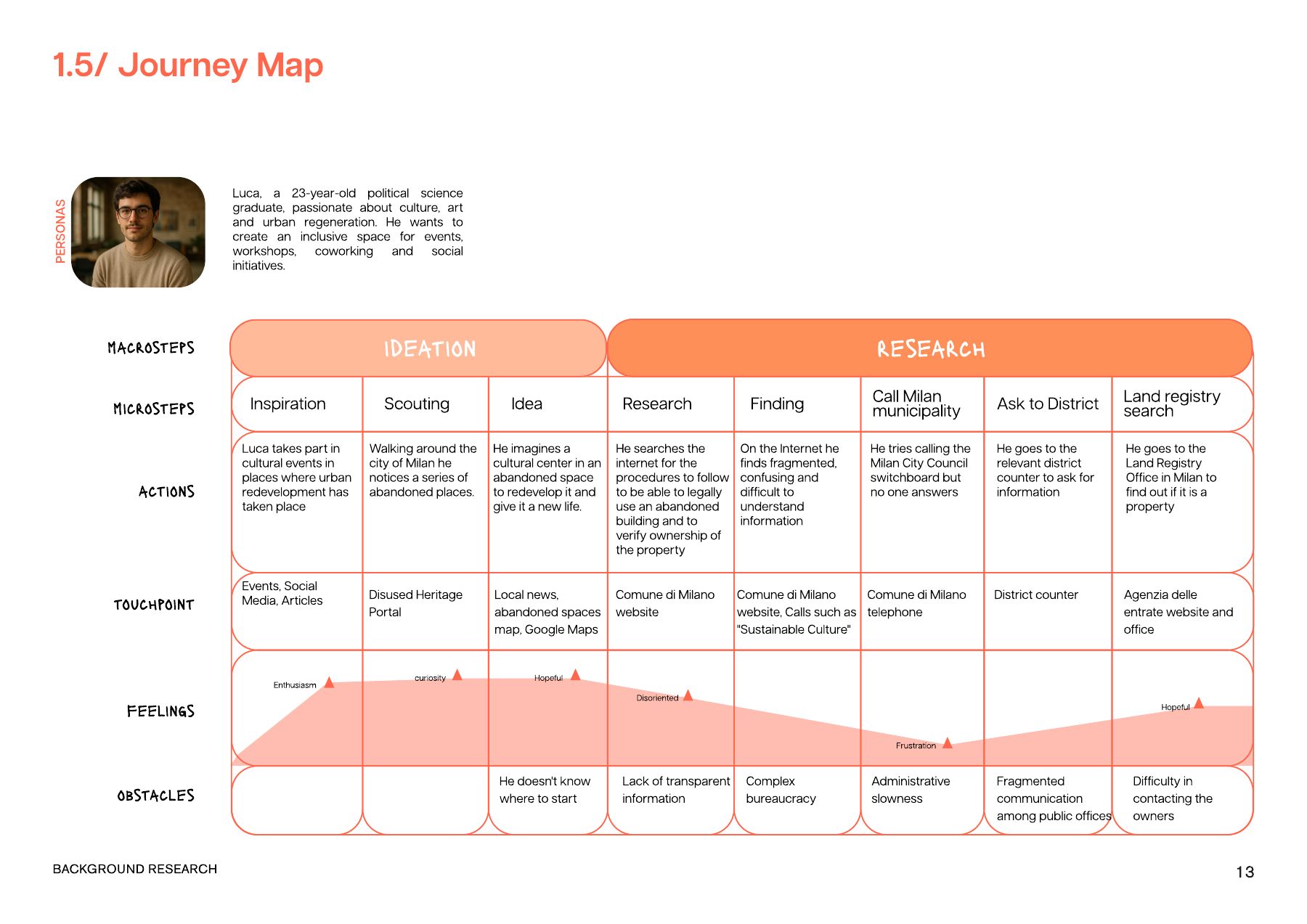
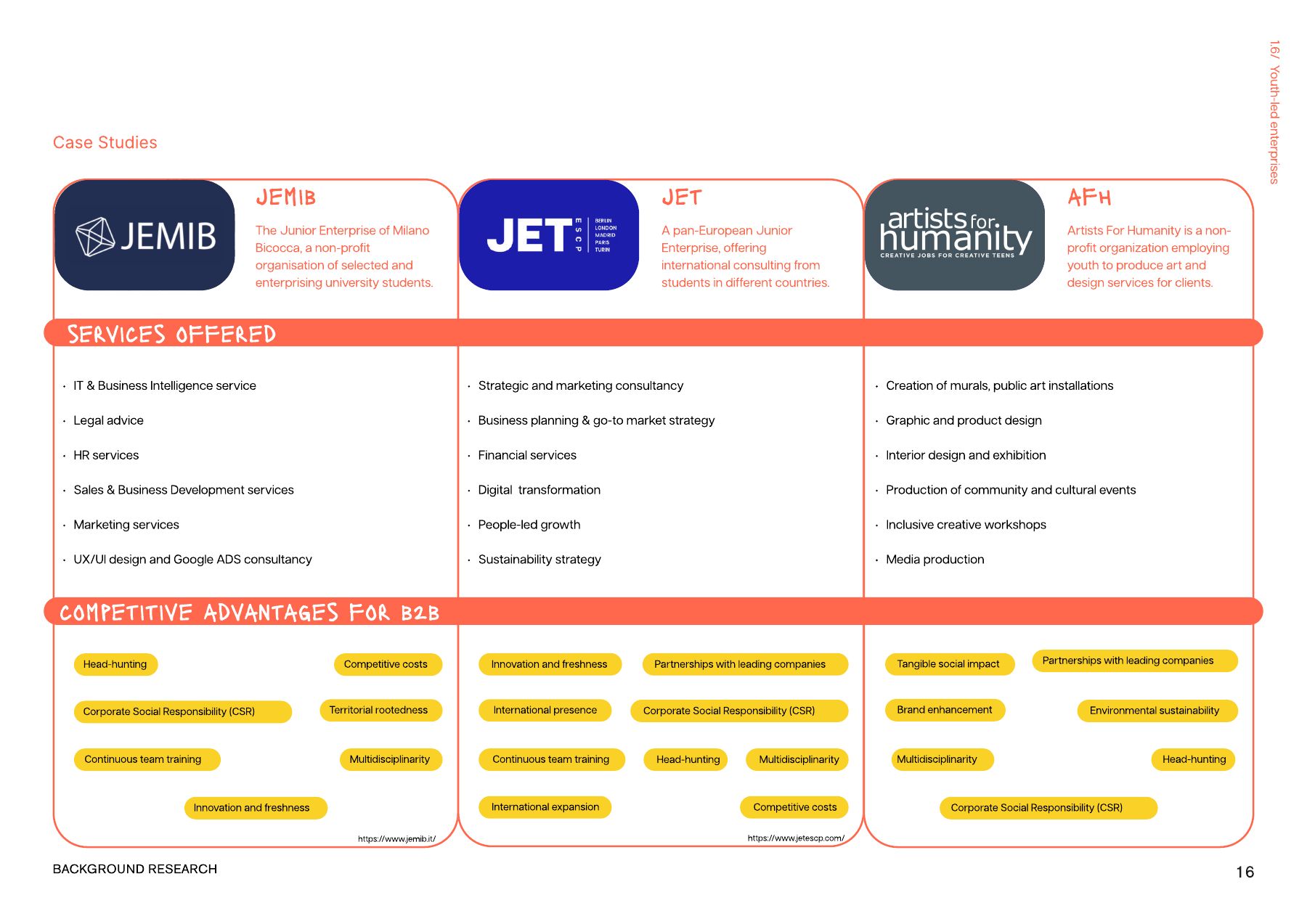
We mapped the journey of young people joining an association, analysed youth-led enterprises such as JEMIB and JEToP, interviewed Argòt and studied cultural associations in Milan — MACAO, Terzo Paesaggio, La Scighera, Zona K — where generational turnover is built into governance.
Young people stay when they can propose, decide and see their ideas become real projects.
2
Concept developmentVision & mission
2.1Reinterpreting Argòt’s DNA
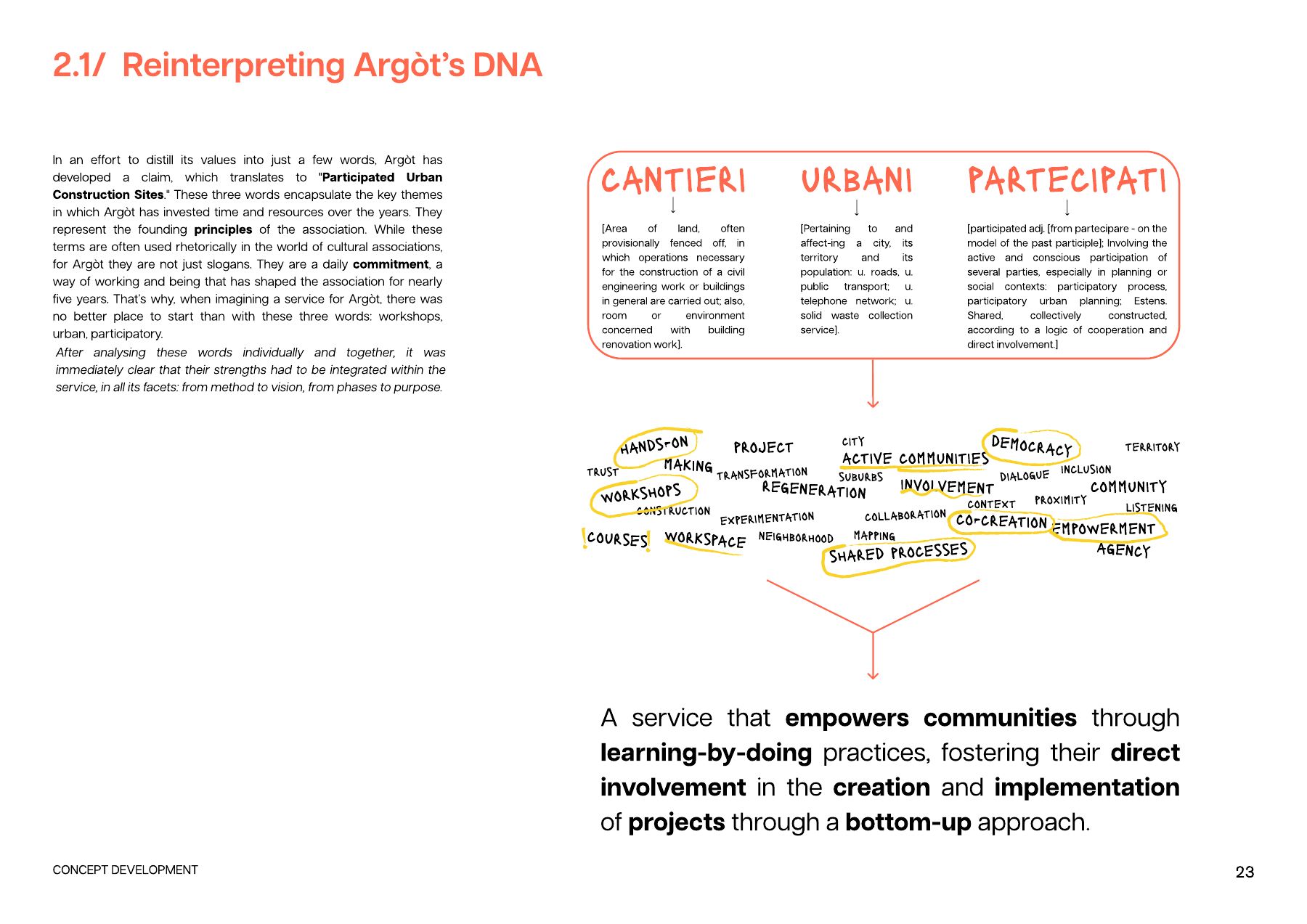
Cantieri Urbani Partecipati — participated urban construction sites.
Argòt sums up its values in three words: cantieri, urbani, partecipati. For Argòt they are not slogans but a daily commitment that has shaped the association for nearly five years — so the service starts from them, in method, vision, phases and purpose.
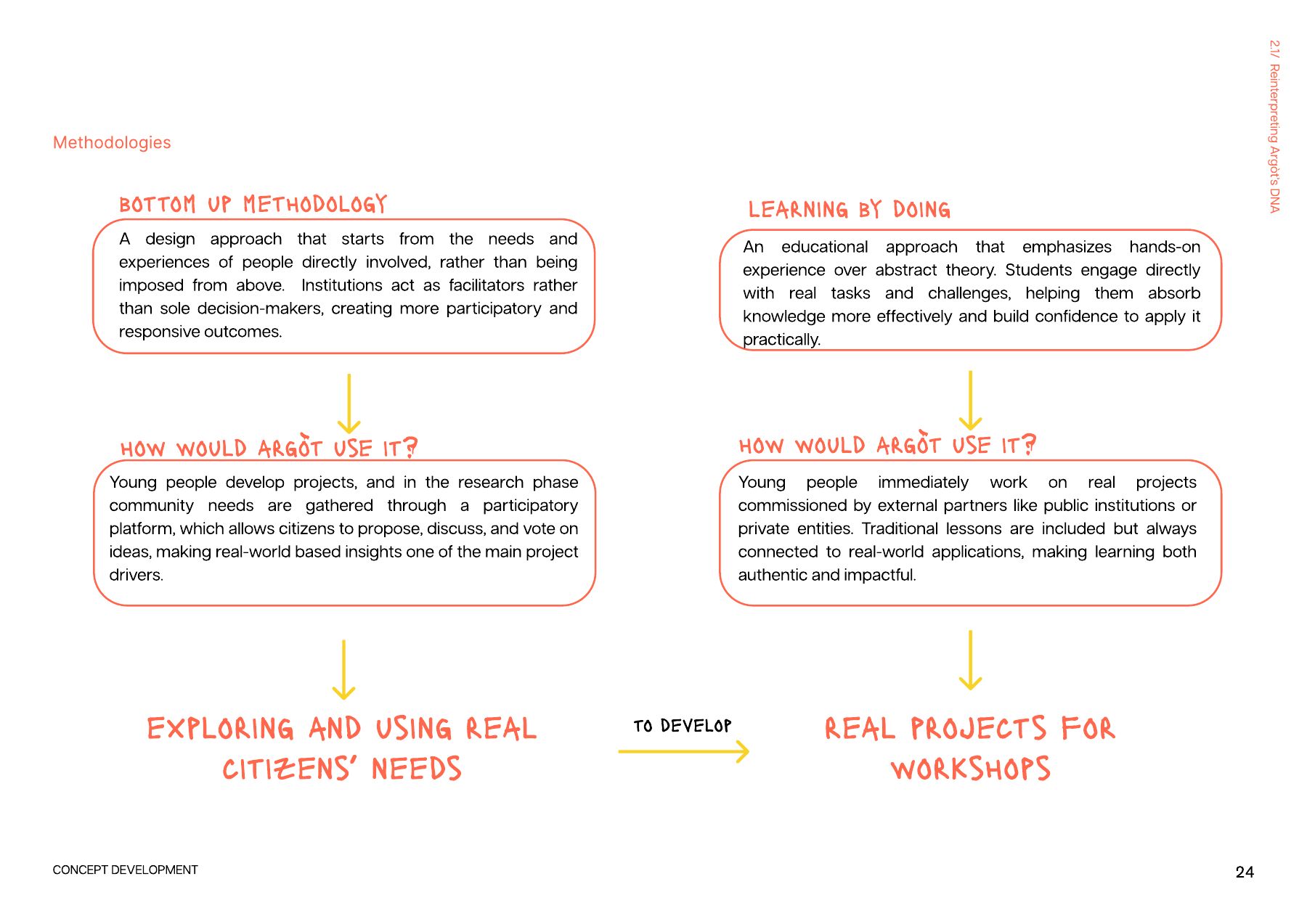
Bottom-up
Young people develop projects from needs gathered through a participatory platform where citizens propose, discuss and vote on ideas.
Learning by doing
Young people work straight away on real projects commissioned by public institutions or private partners.
2.2Vision & mission
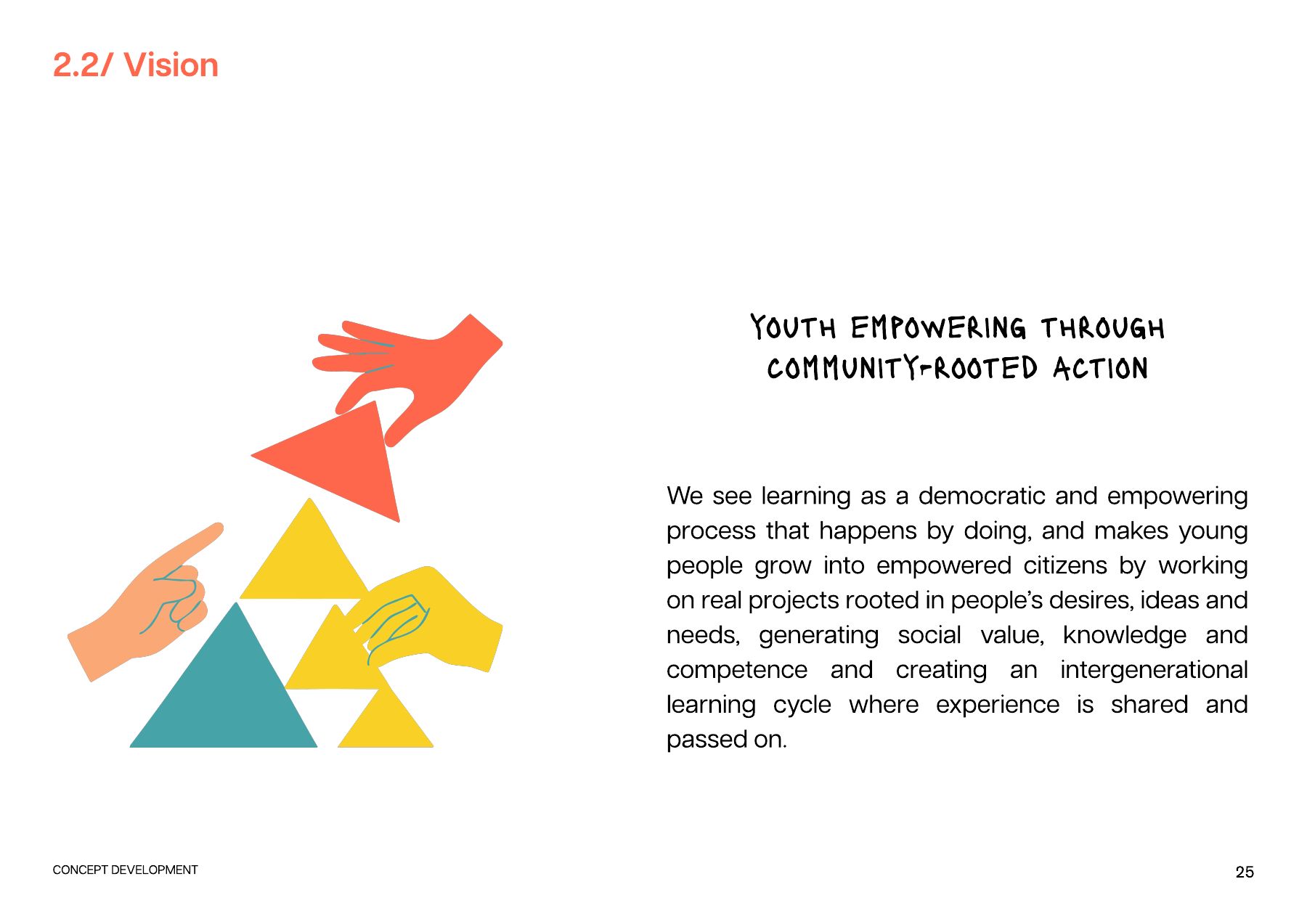
Youth empowerment through community-rooted action.
We see learning as a democratic and empowering process that happens by doing, and makes young people grow into empowered citizens by working on real projects rooted in people’s desires, ideas and needs.
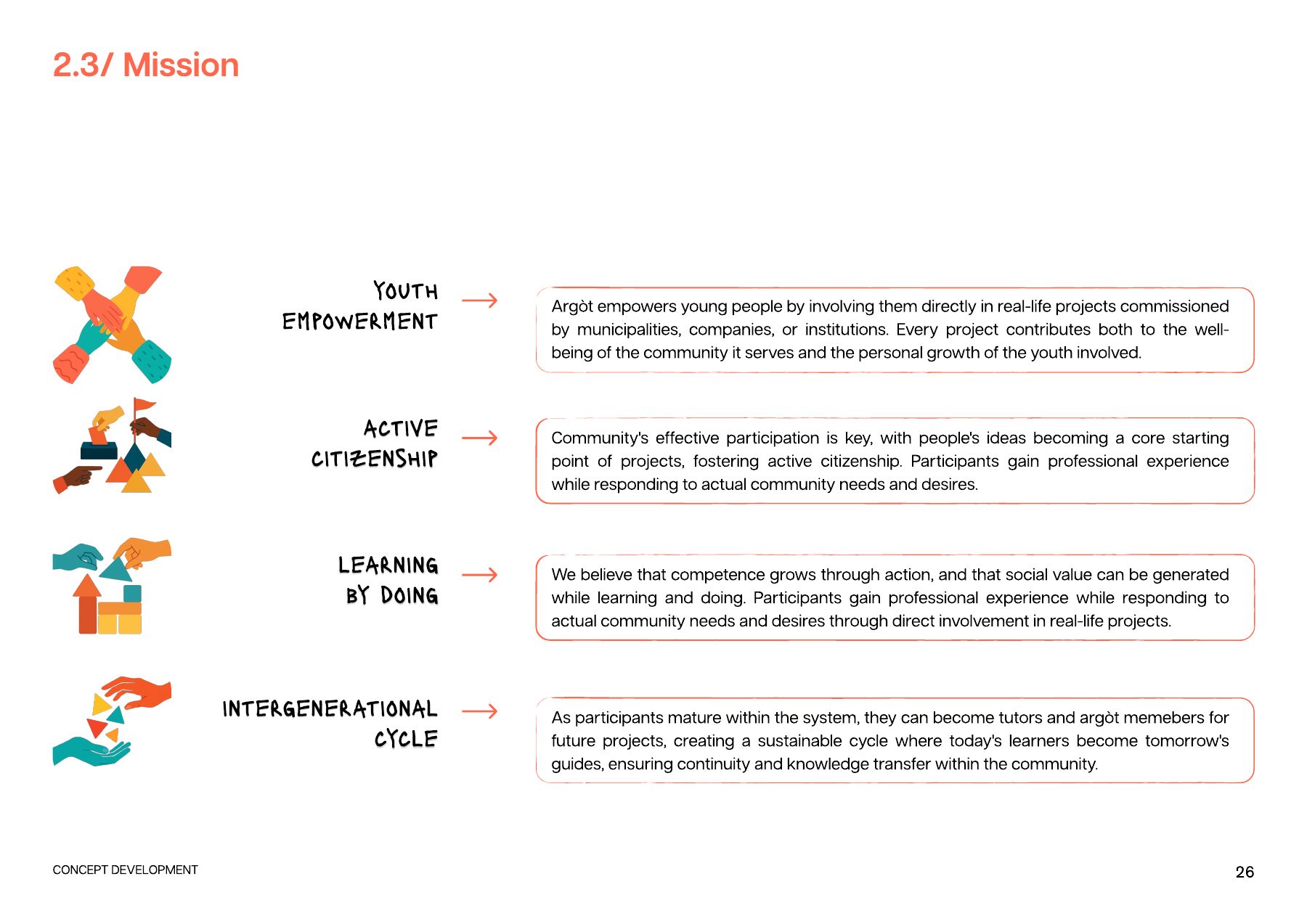
Youth empowerment
Real projects for municipalities, companies and institutions grow both the community and the young people involved.
Active citizenship
People’s ideas become the starting point of projects.
Learning by doing
Competence grows through action; social value is created while learning.
Intergenerational cycle
Today’s learners become tomorrow’s tutors and Argòt members.
2.3Concept
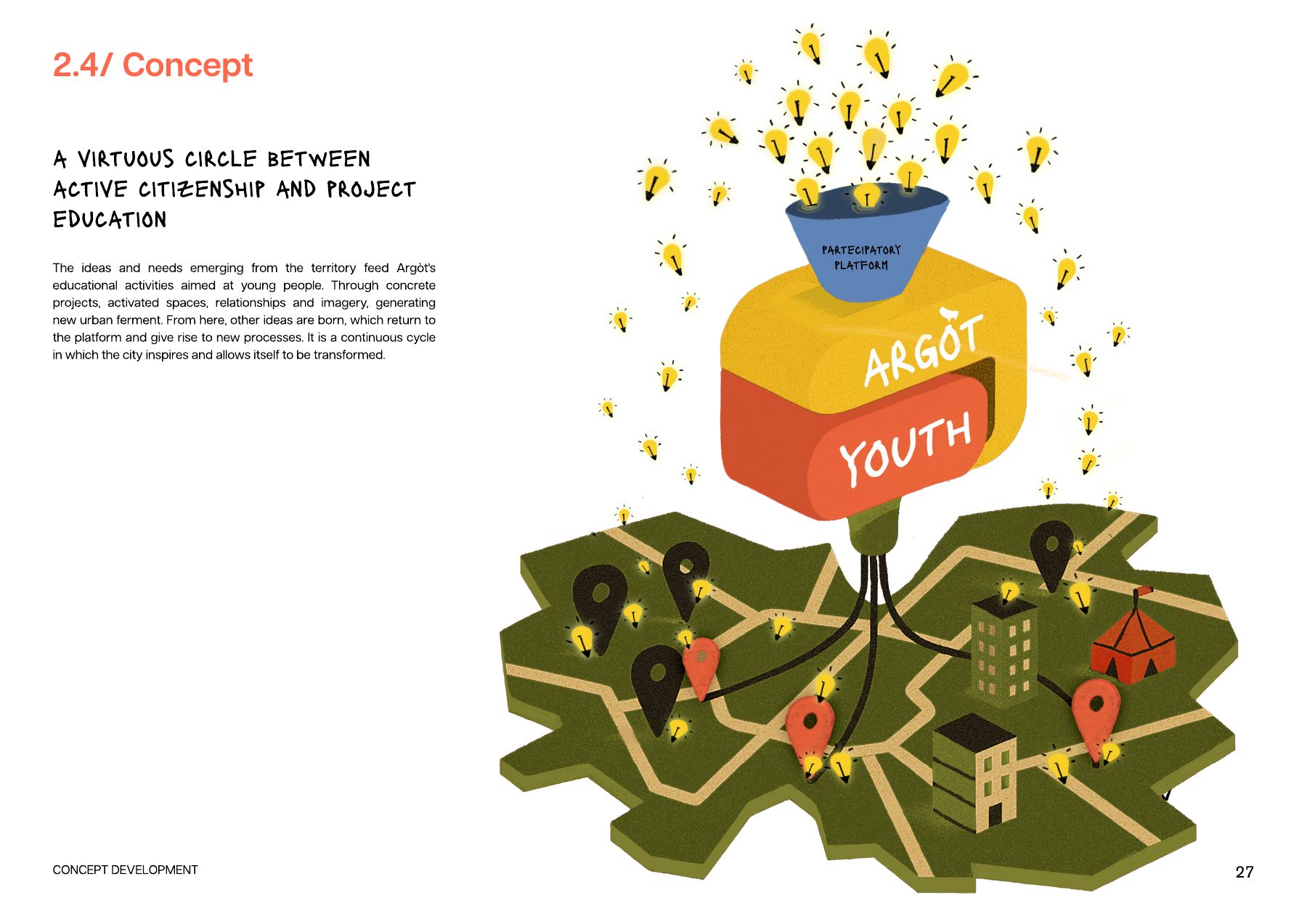
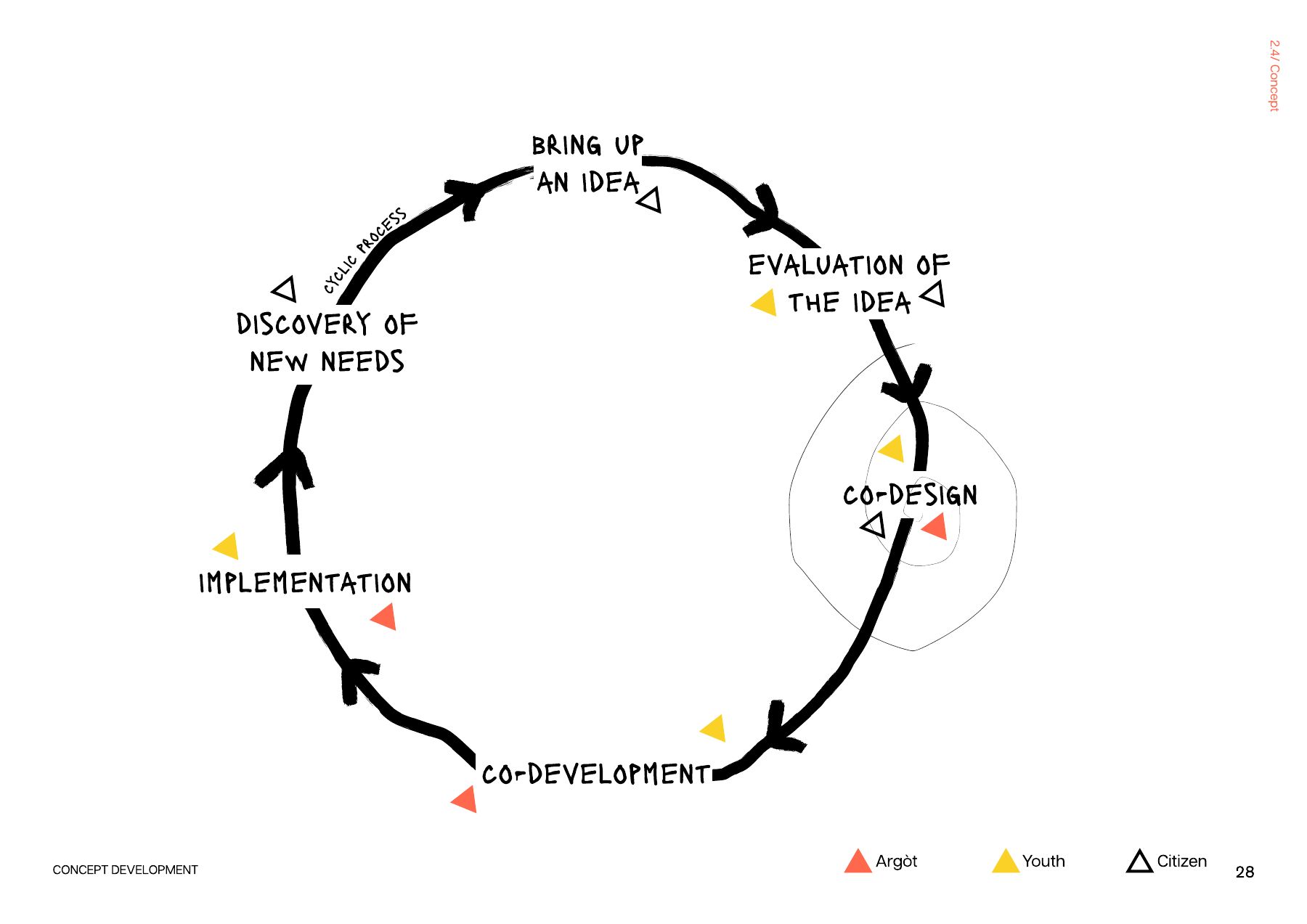
A virtuous circle between active citizenship and project education.
Ideas and needs from the territory feed Argòt’s educational activities for young people. Through concrete projects, activated spaces, relationships and imagery they generate new urban ferment — and new ideas that return to the platform and start new processes. The city inspires, and lets itself be transformed.
- Bring up an idea
- Evaluation
- Discovery of new needs
- Co-design
- Co-development
- Implementation
3
ServiceFai Spazio
3.1Fai Spazio
Make room. Then we’ll fill it together.
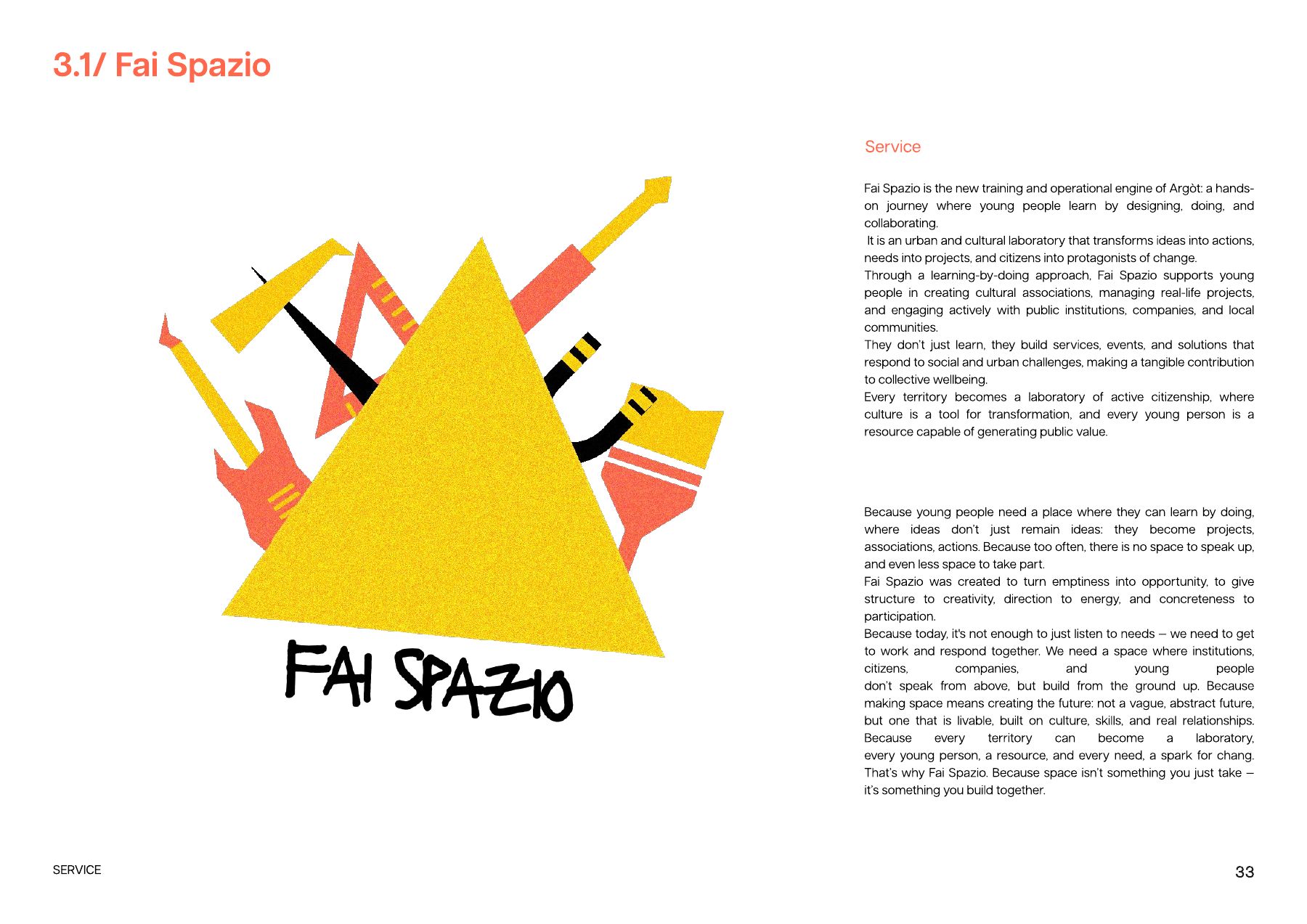
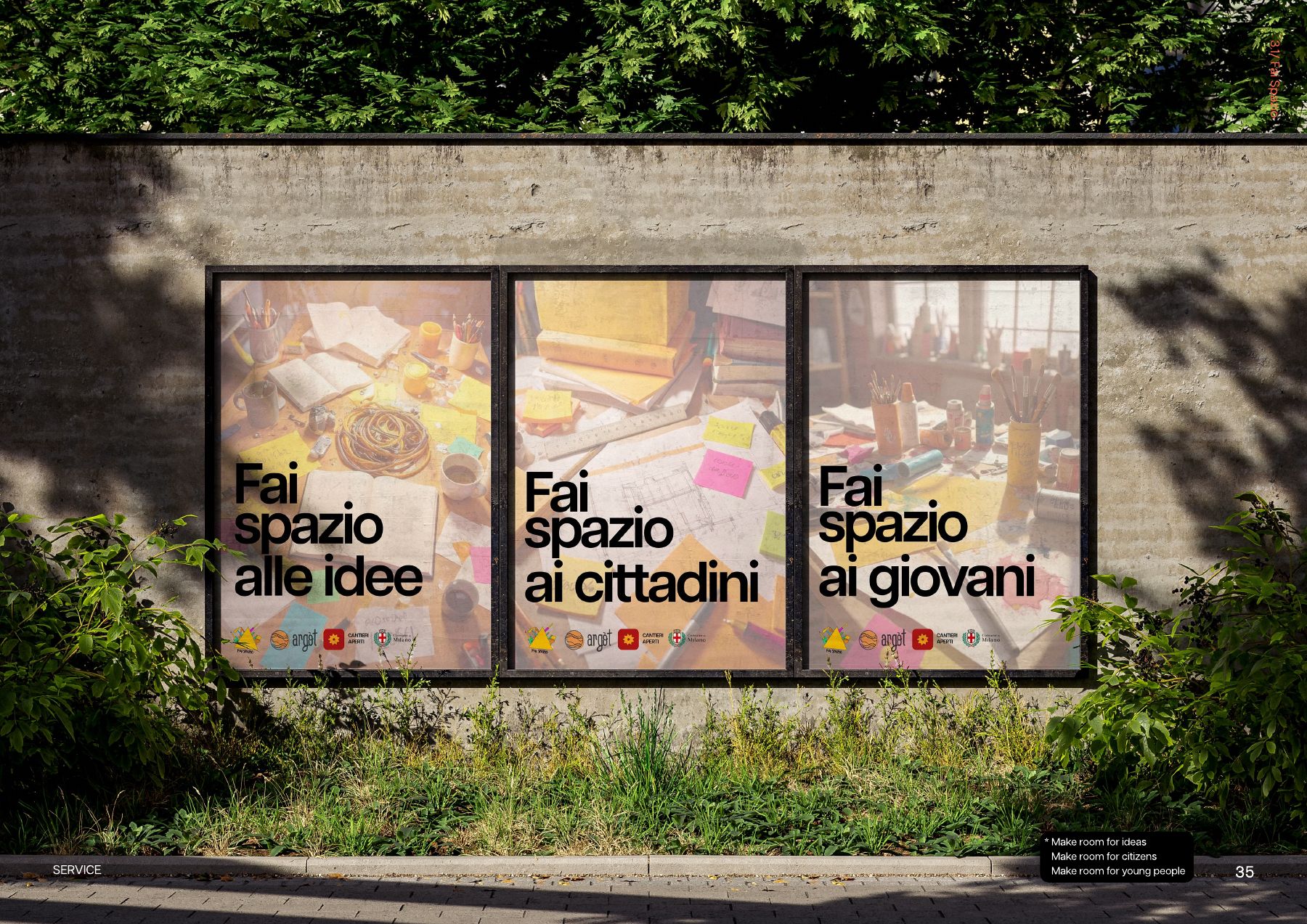
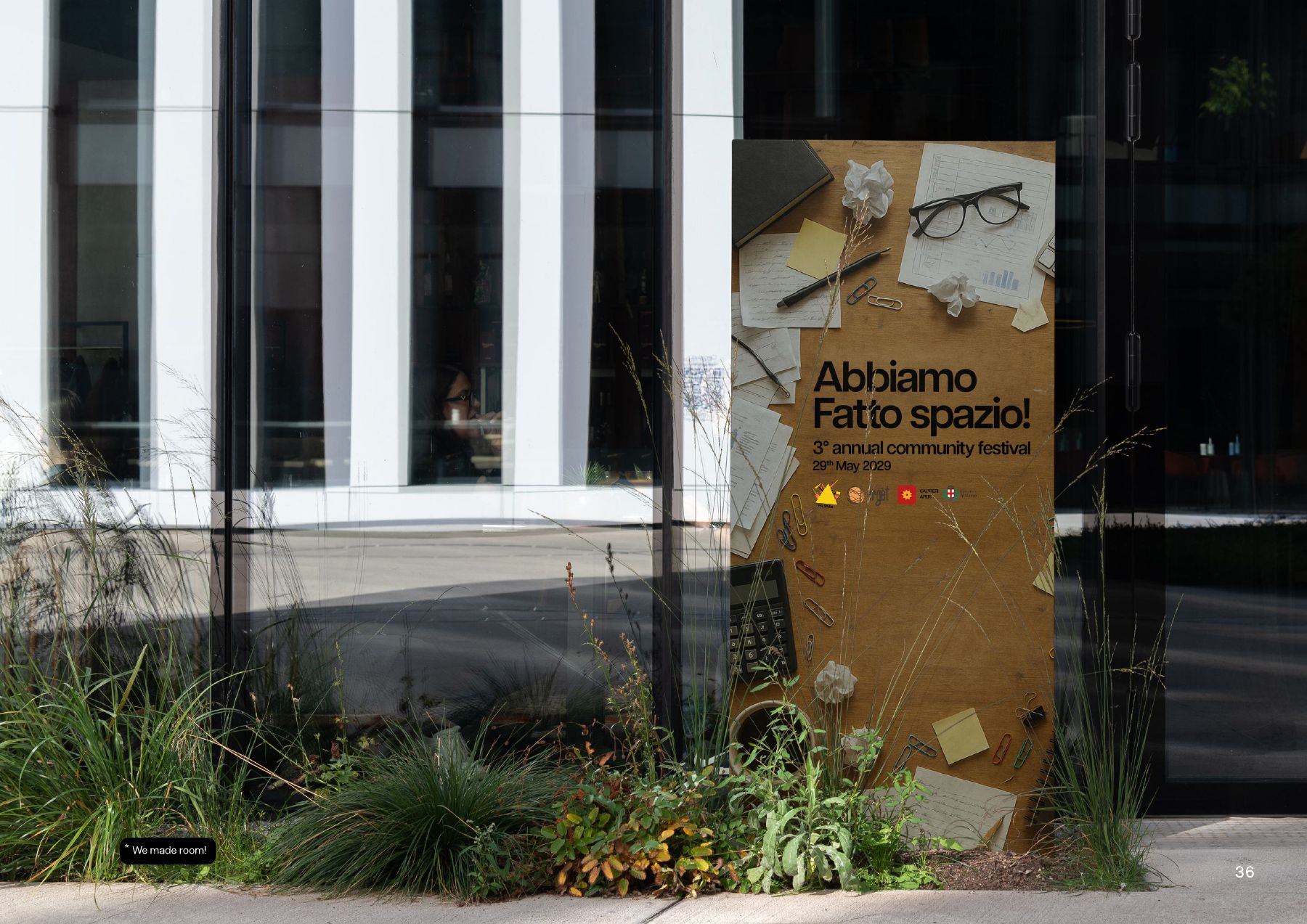
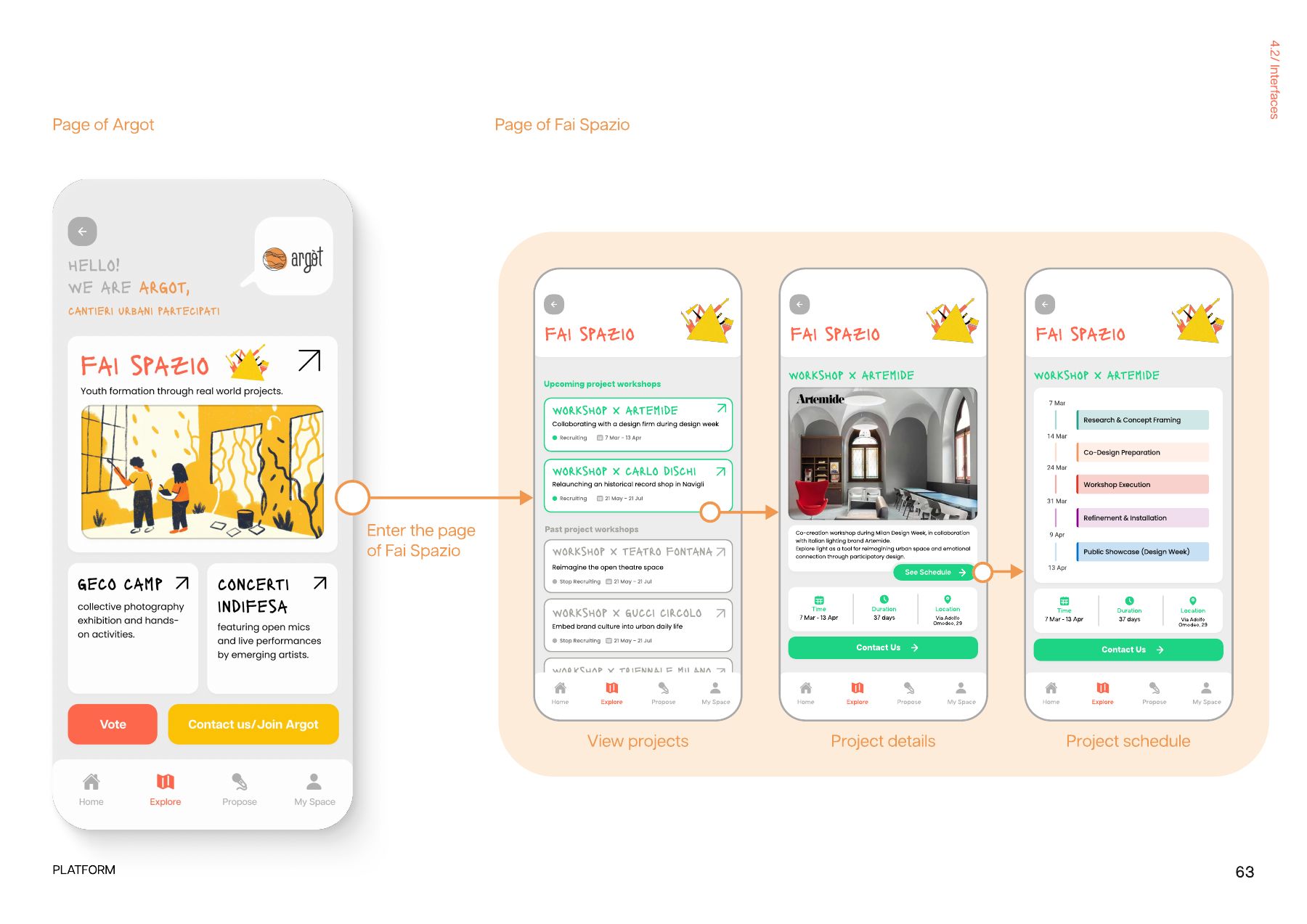
“Fai Spazio” — make room — is more than an invitation: it is a concrete action and an opening. It asks to step forward and give voice and shape to what often stays on the margins: the ideas of young people, emerging needs and the energy of local communities.
The pictograms of the logo come from Argòt’s fields of action, which are also the learning areas of the courses: the screwdriver for learning by doing, the guitar for music and performance, the magnet for bringing people together, the paintbrush for artistic practice, the set square for technical design and the hammer for a bottom-up approach.
3.2System map
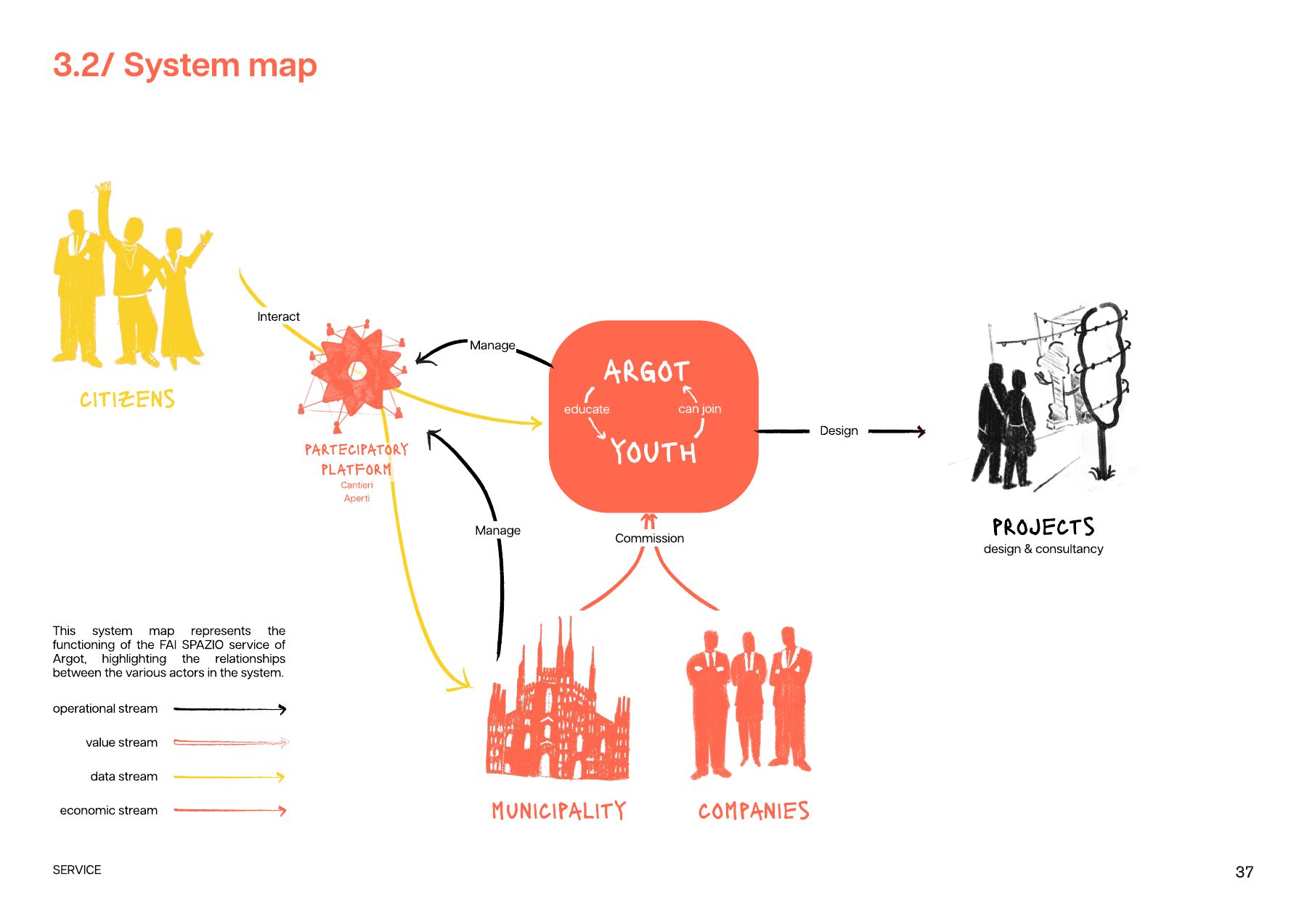
Argòt as the central hub.
Argòt
Educates and coordinates young people, manages operations and project workflows, ensures quality and connects institutions, companies and citizens.
Youth
Drive the activities through learning by doing, co-designing real projects with core members for public and private clients.
Municipalities
Manage the platform locally and turn emerging needs into calls and commissions for associations.
Companies
Commission projects on cultural and social topics, funding the work and receiving consultancy or design outputs.
Citizens
Share needs and propose ideas that shape project priorities.
Participatory platform
Collects citizen input transparently and provides data for project development.
3.3Youth involvement
Two ways in, one way up.
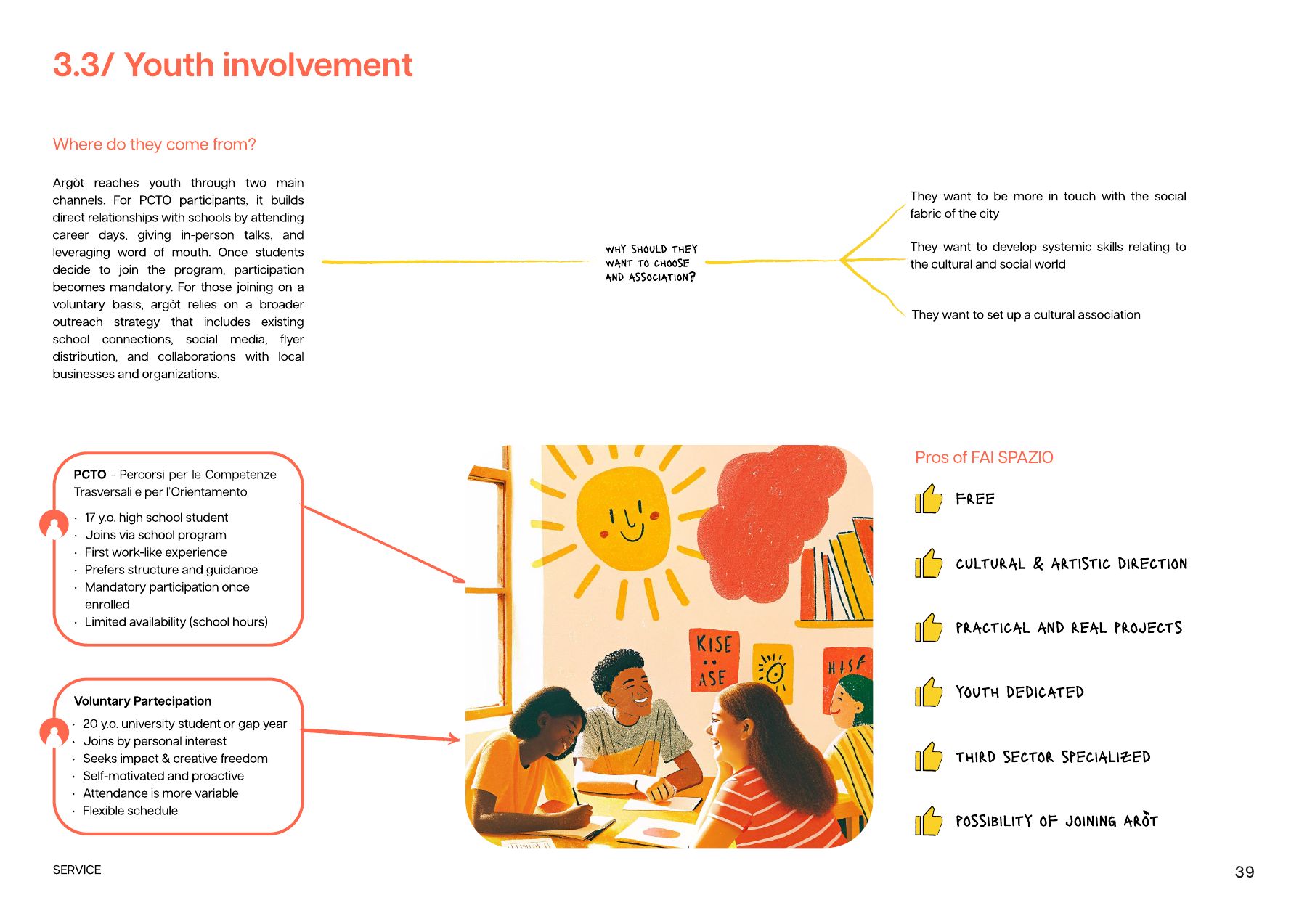
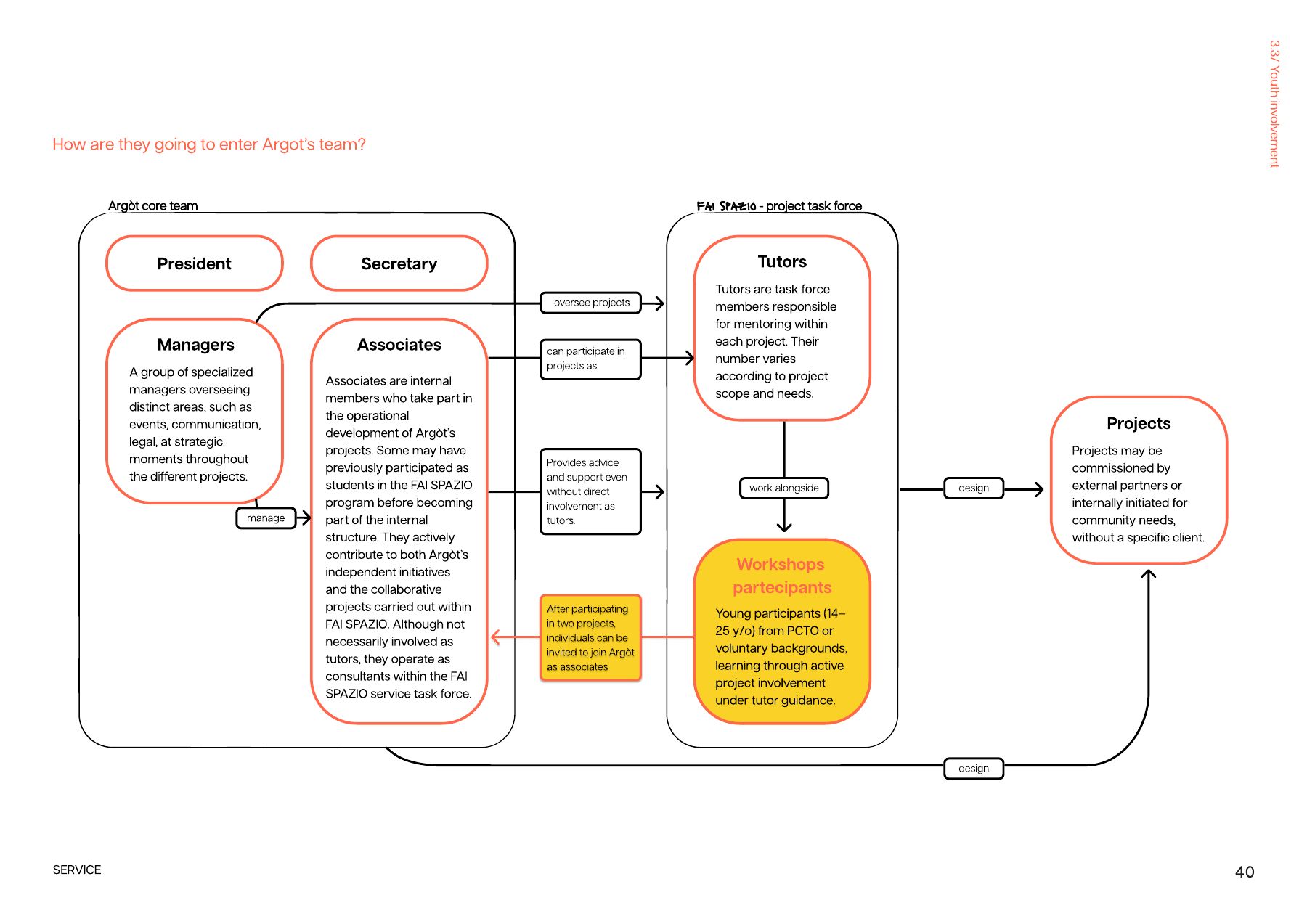
Participants aged 14–25 learn on real projects under the guidance of tutors. After two projects they can be invited to join Argòt as associates — and later become tutors themselves, closing the intergenerational cycle.
3.4Offering & courses
Two core courses before the project workshops.
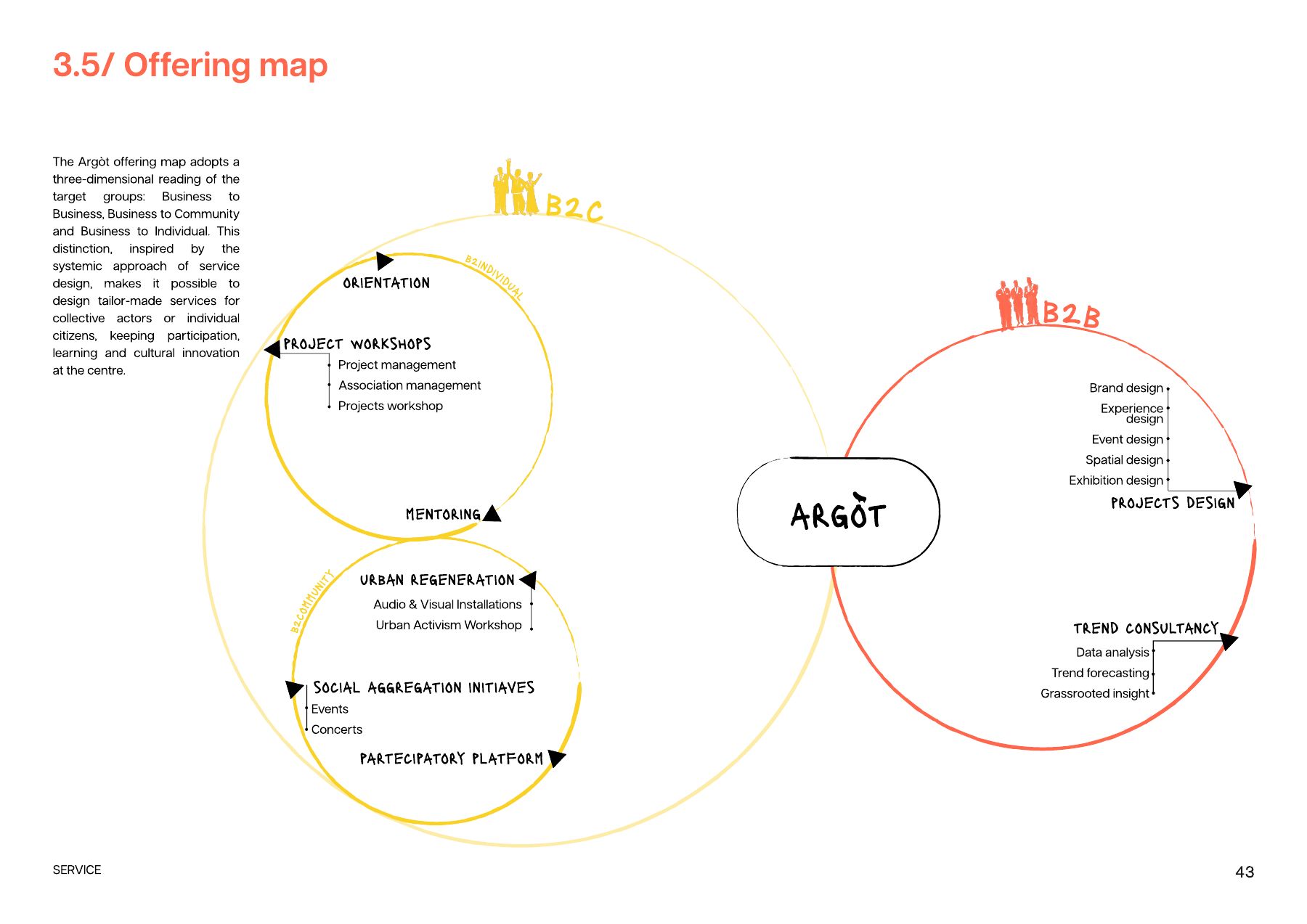
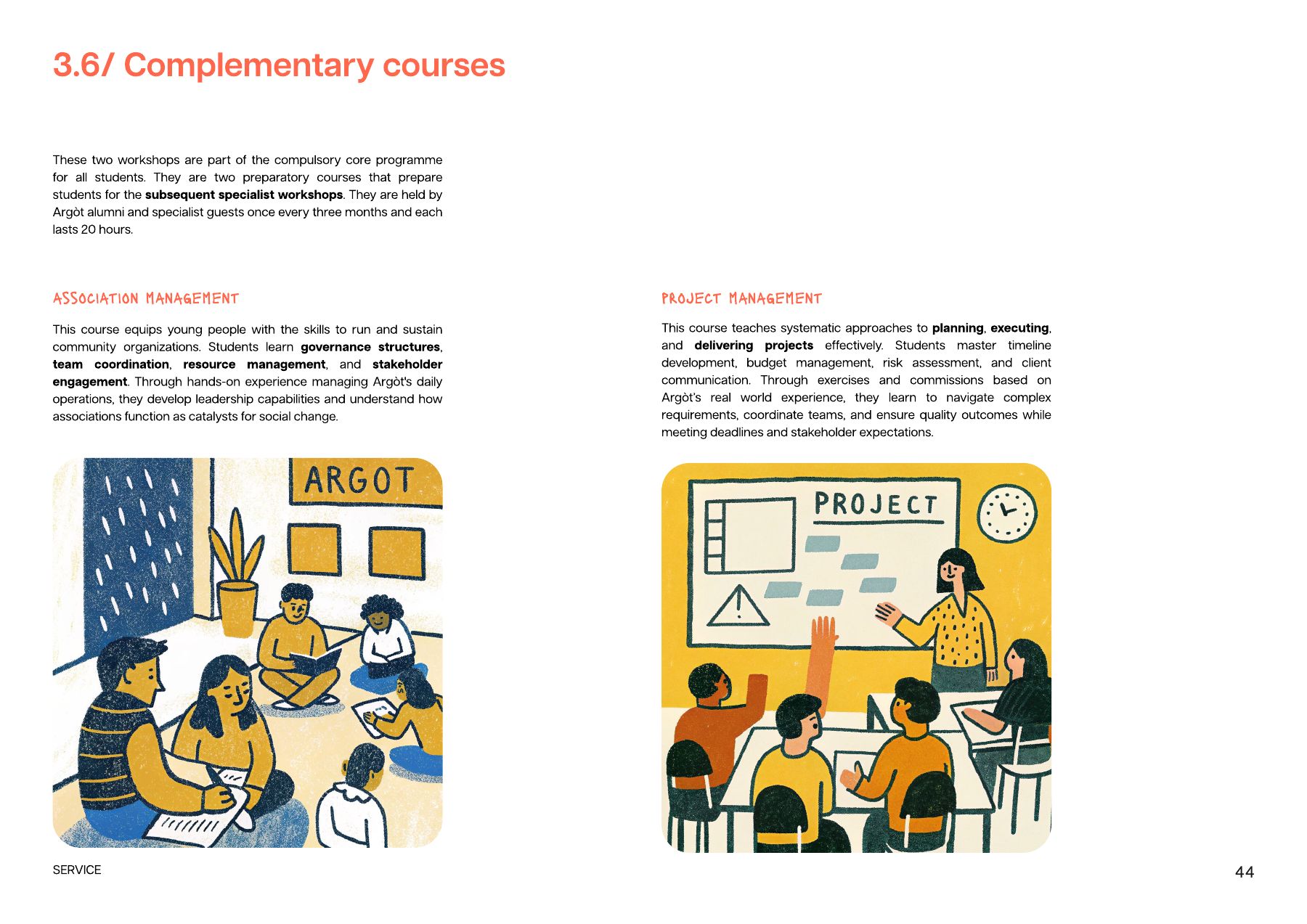
Association management
Governance, team coordination, resources and stakeholder engagement — learned by running Argòt’s daily operations.
Project management
Timelines, budgets, risk and client communication, through exercises based on Argòt’s real commissions.
Both are held by Argòt alumni and guests every three months and last 20 hours each.
3.5Project workshops
Three scenarios of the service at work.
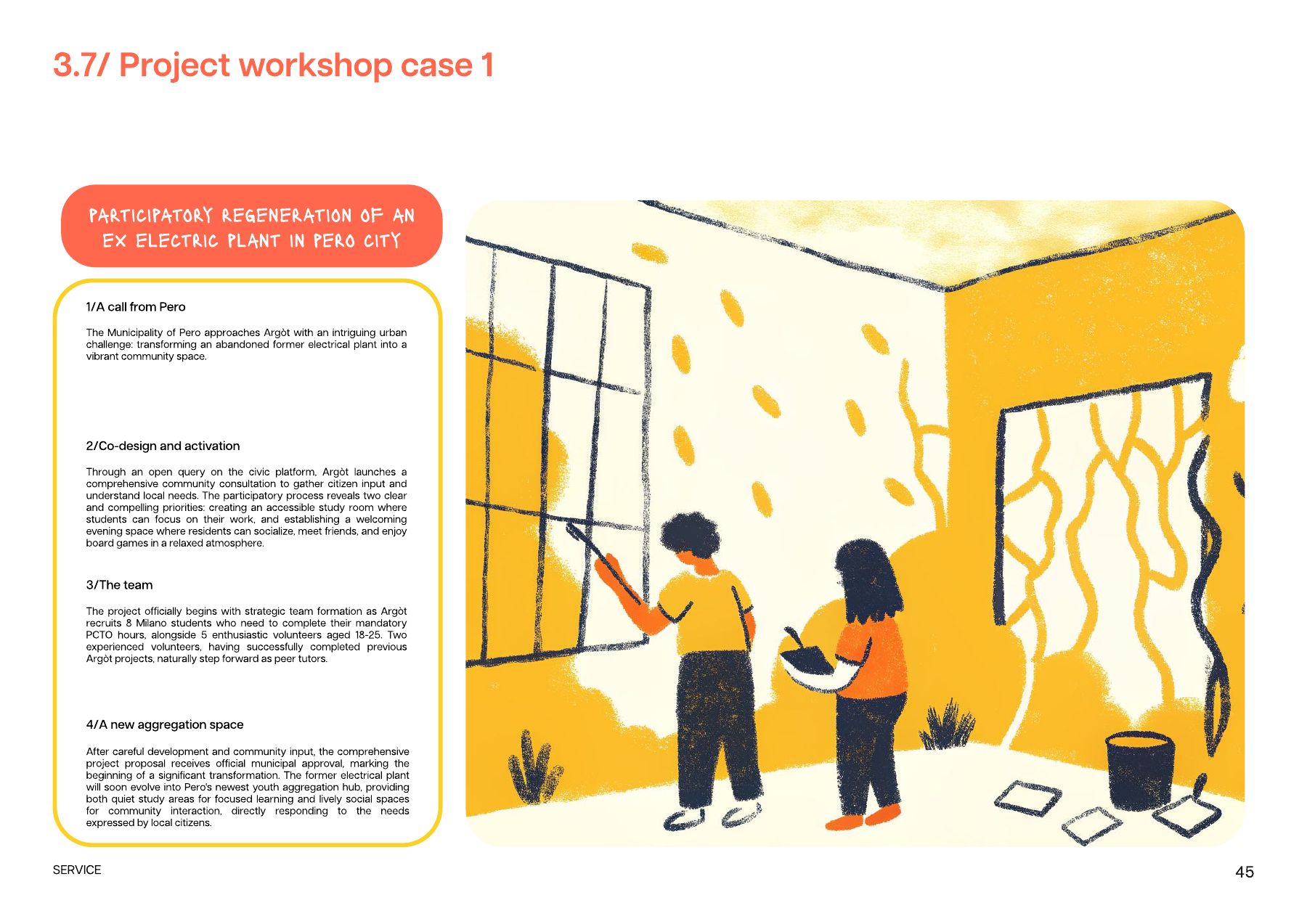
A former power plant in Pero
A platform consultation reveals two needs — a study room and an evening space for board games. 8 PCTO students and 5 volunteers, with 2 peer tutors, design a new youth hub approved by the city.
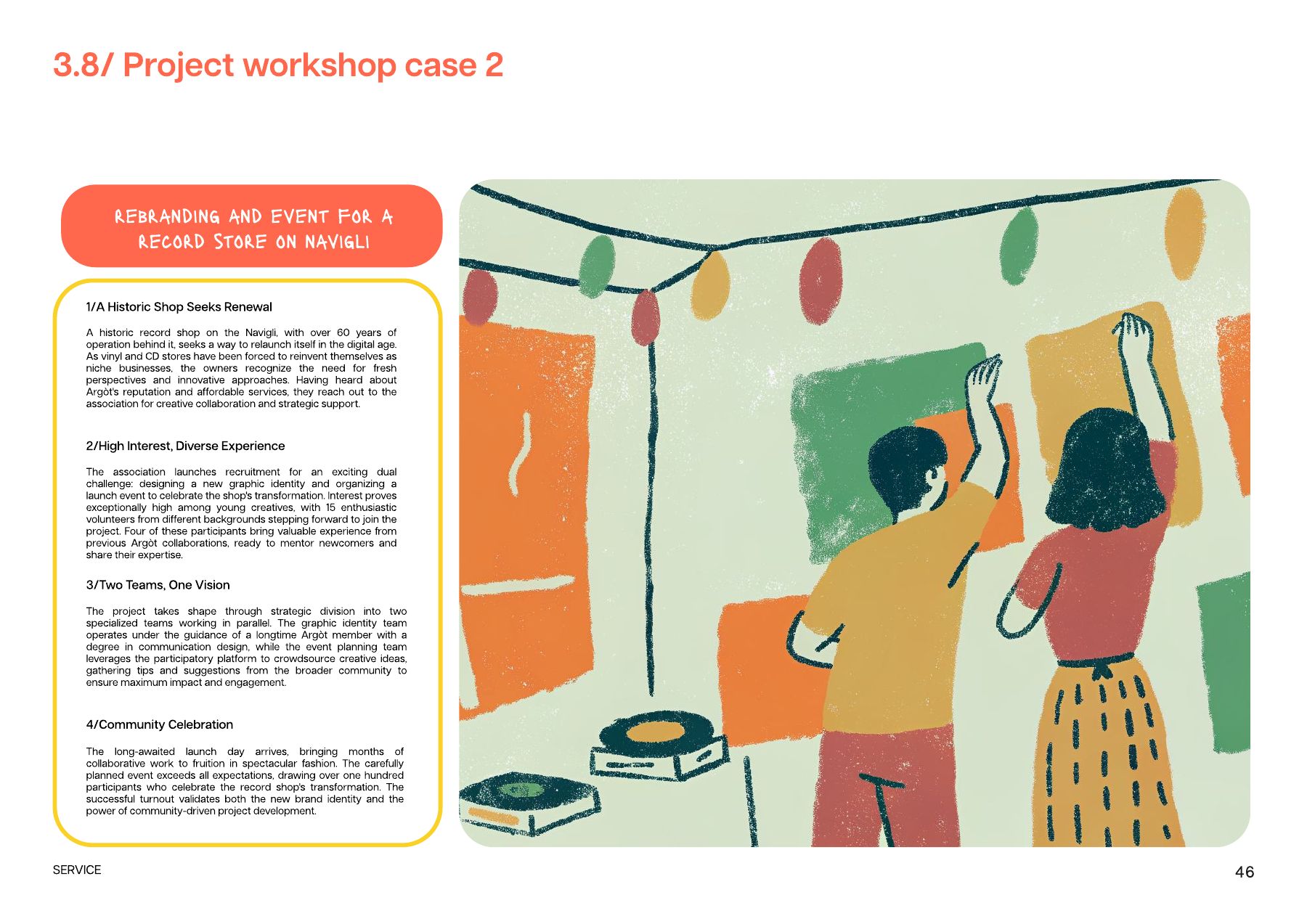
A record store on the Navigli
A 60-year-old shop asks for a relaunch. 15 volunteers split into two teams: a new graphic identity and a launch event crowdsourced through the platform.
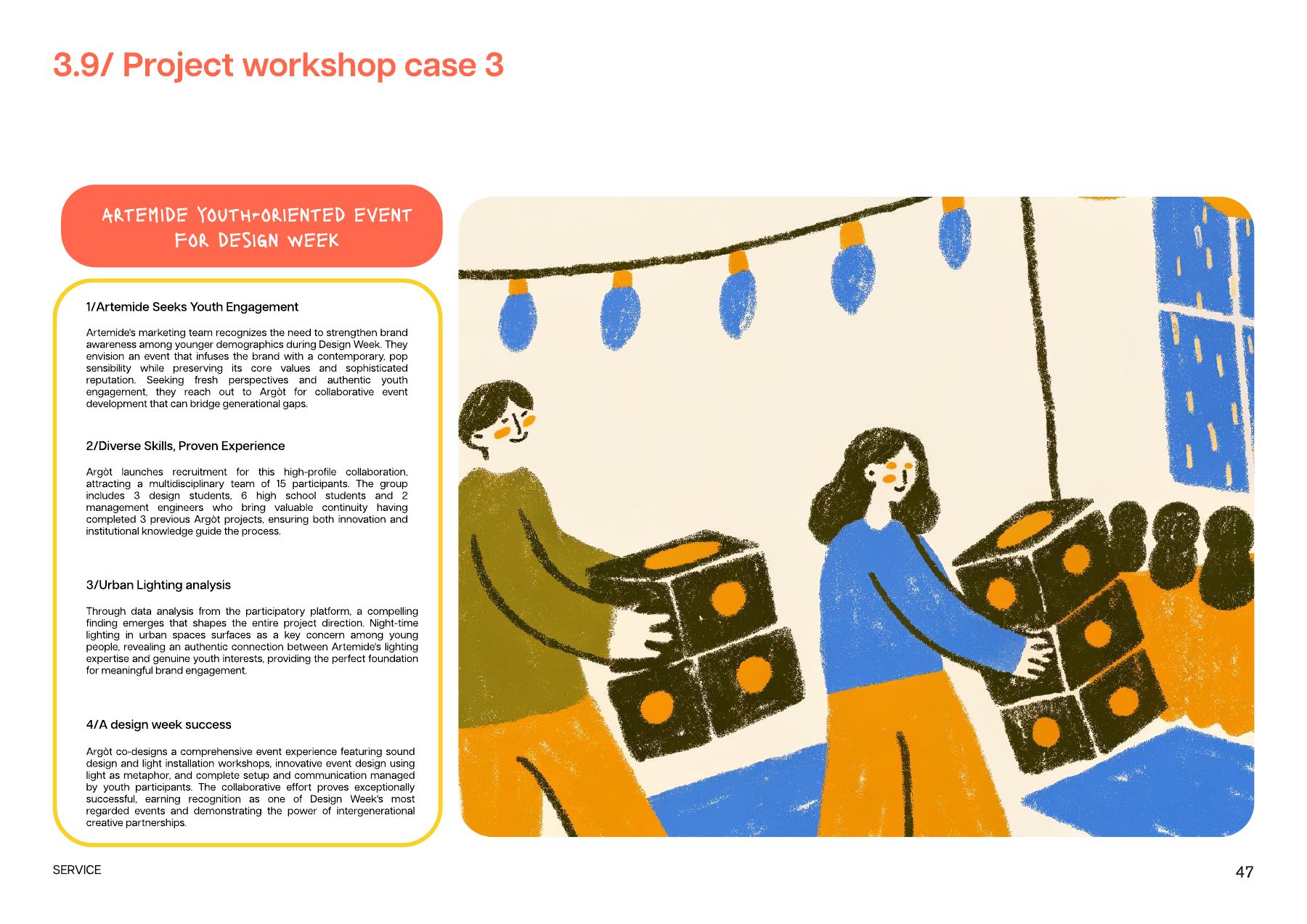
Artemide at Design Week
Platform data shows night-time lighting is a key concern for young people — the base for light and sound workshops and an event run by youth participants.
3.6Stakeholders & blueprint
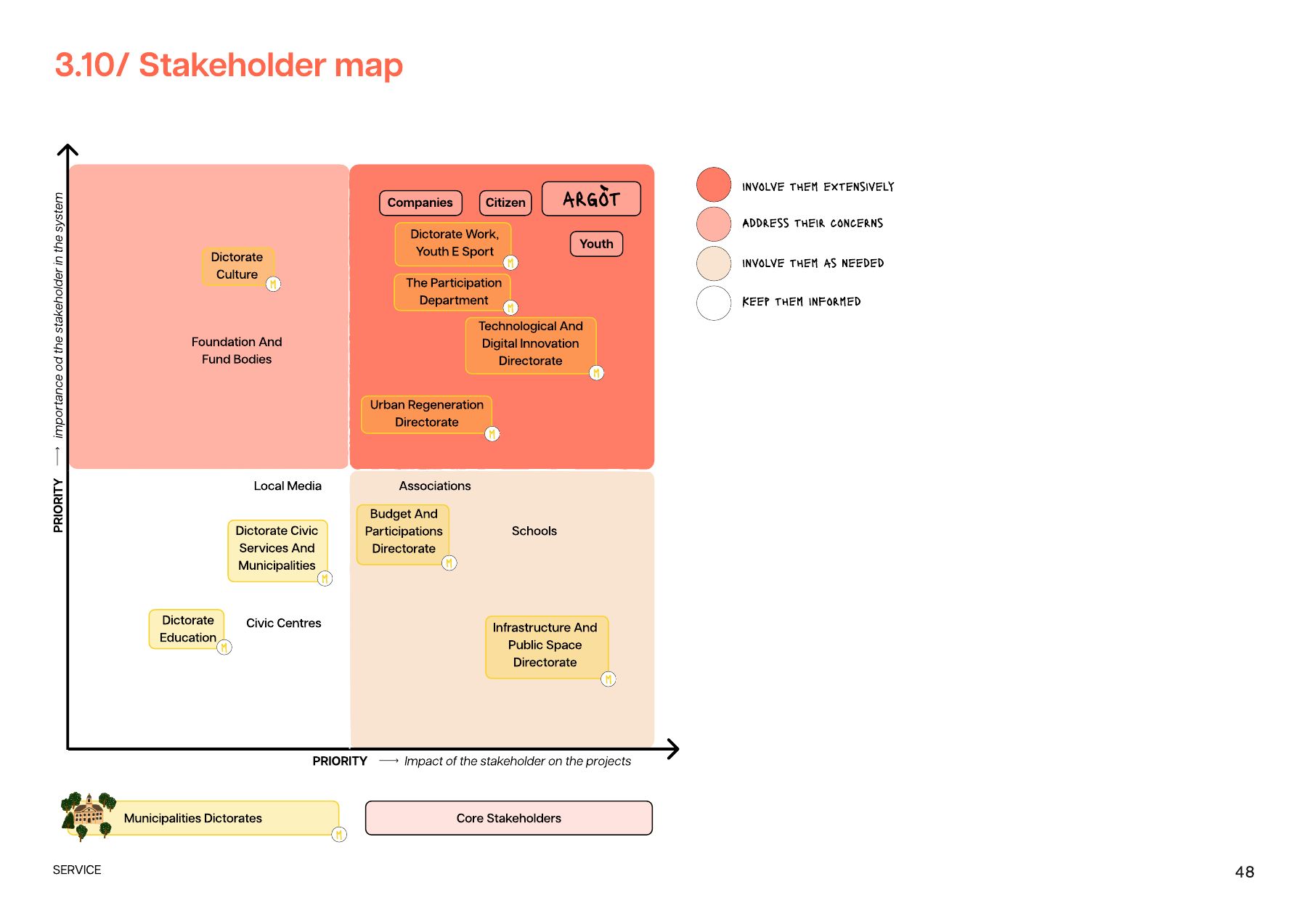
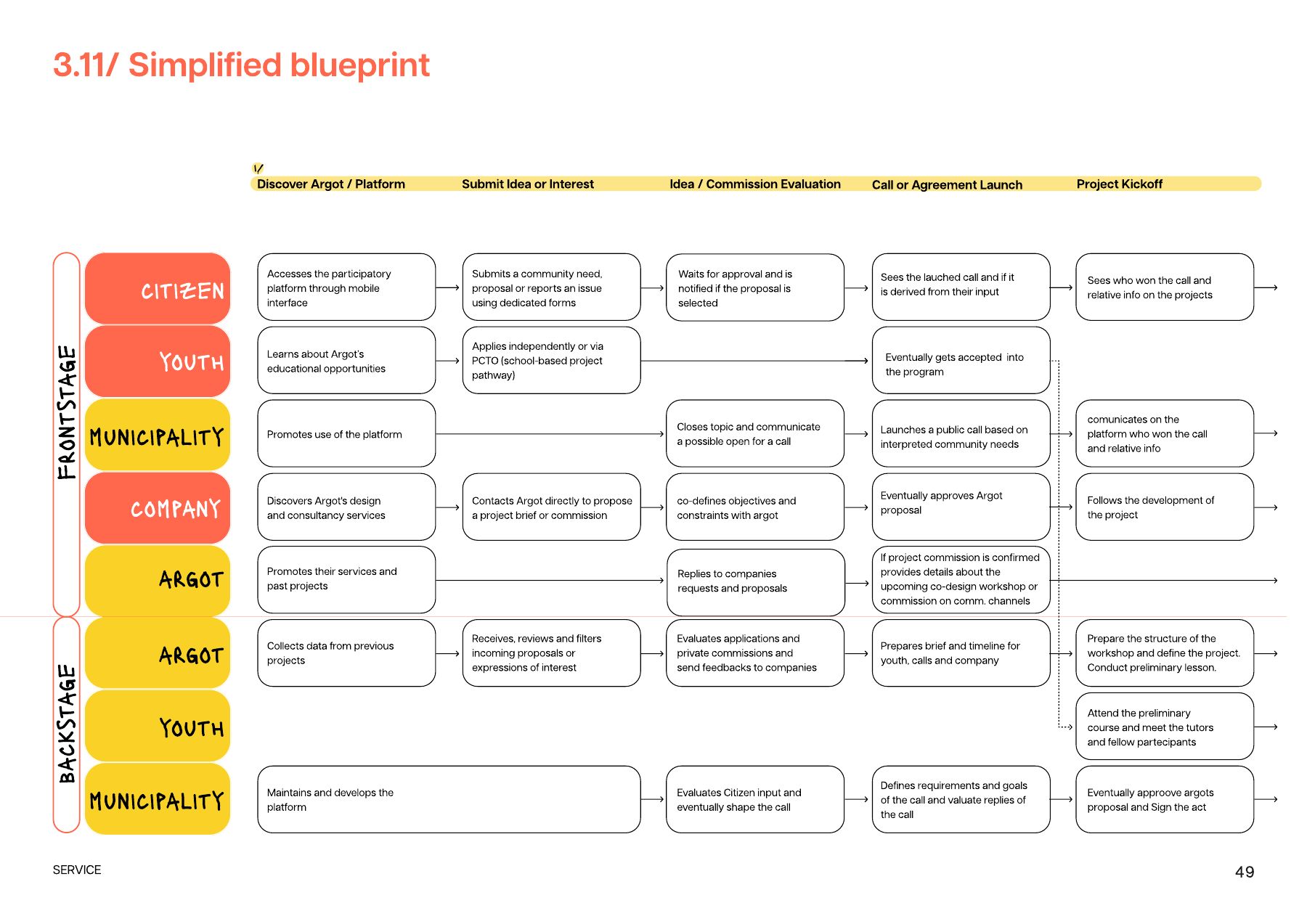
Who matters, and how the service runs.
3.7Annual community festival
Parco dei Triangoli, once a year.
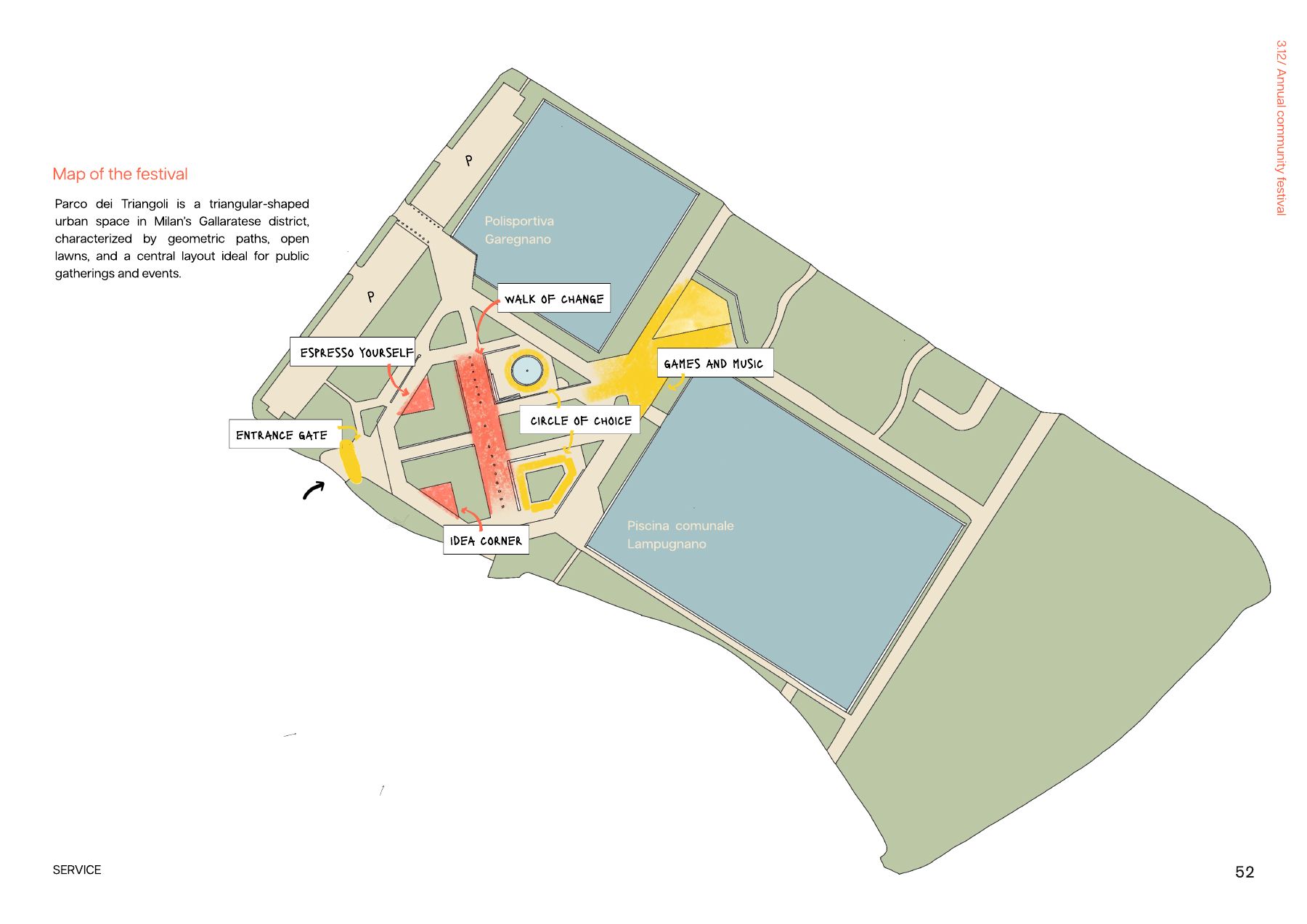
Once a year Argòt and the wider community meet at Parco dei Triangoli in Gallaratese, together with the Municipality of Milan: exhibitions of the year’s projects, live music, food and a festive atmosphere that strengthens the sense of belonging.
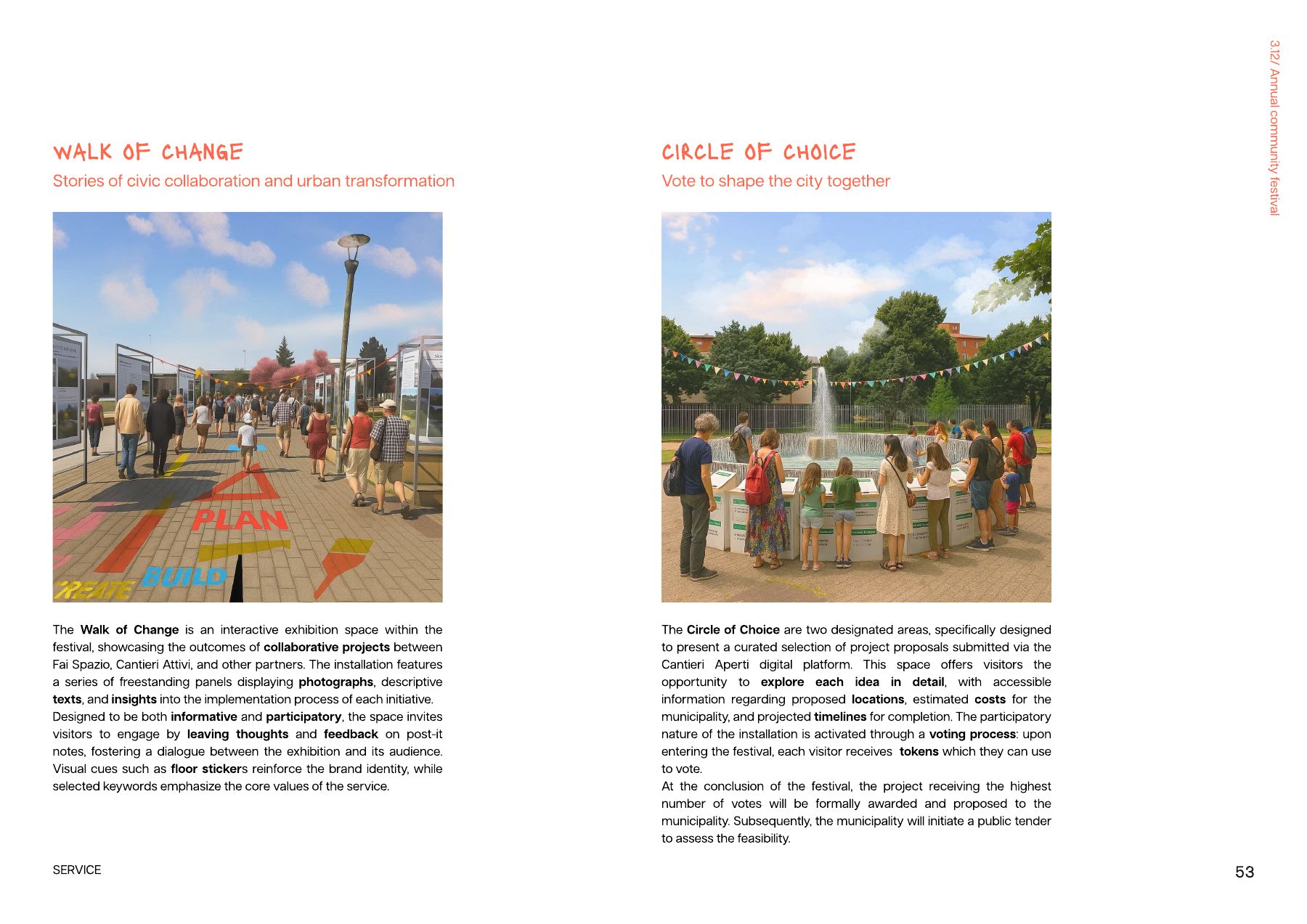
- Walk of Change — panels with the outcomes of the projects, where visitors leave feedback on post-its.
- Circle of Choice — proposals from the platform; visitors vote with tokens and the winner is proposed to the municipality.
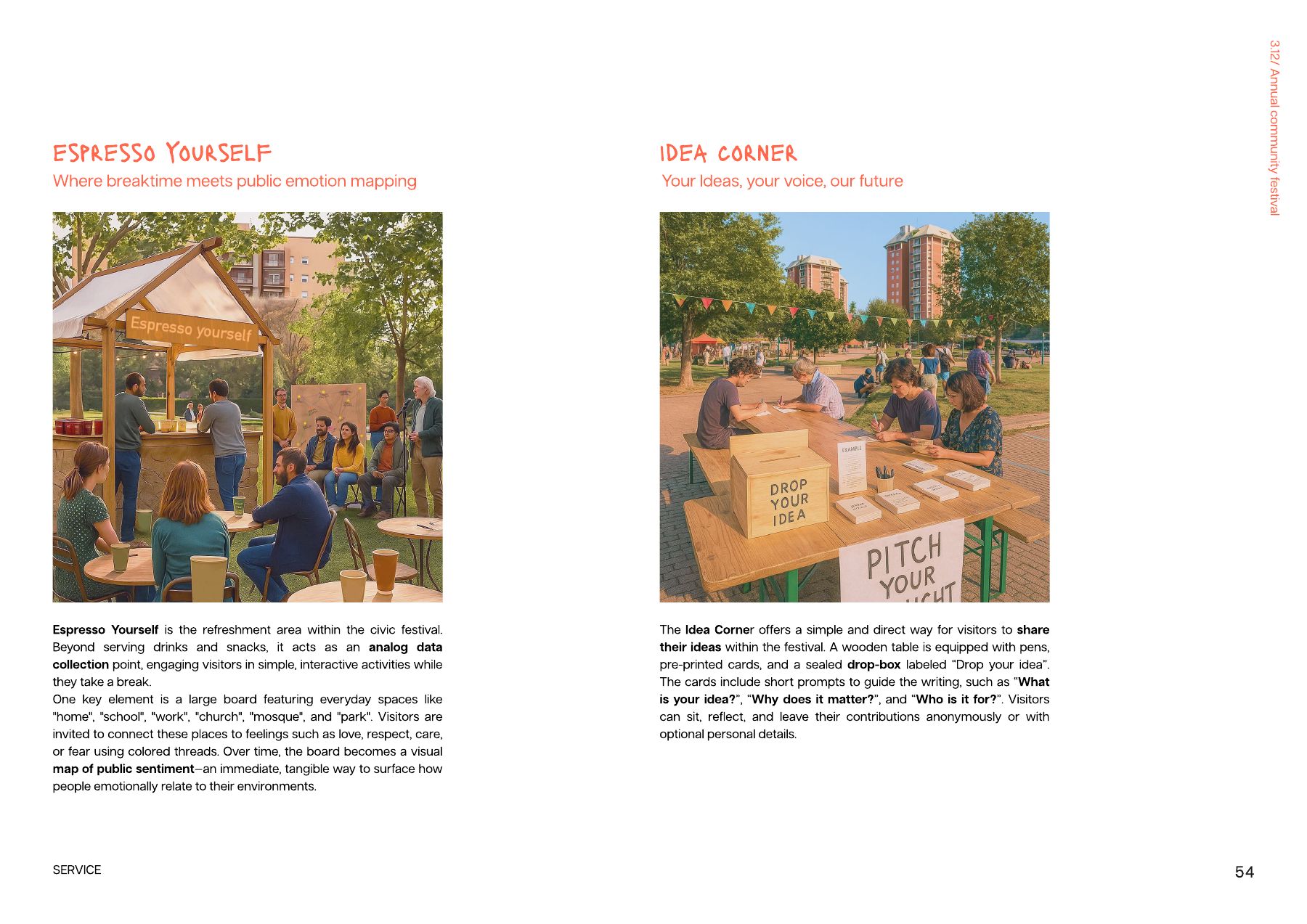
- Espresso Yourself — the refreshment area doubles as an analog emotion map of everyday places.
- Idea Corner — cards and a drop-box: “What is your idea? Why does it matter? Who is it for?”
4
PlatformCantieri Aperti
4.1Cantieri Aperti
A participatory platform for Milan, building on Milano Attiva.
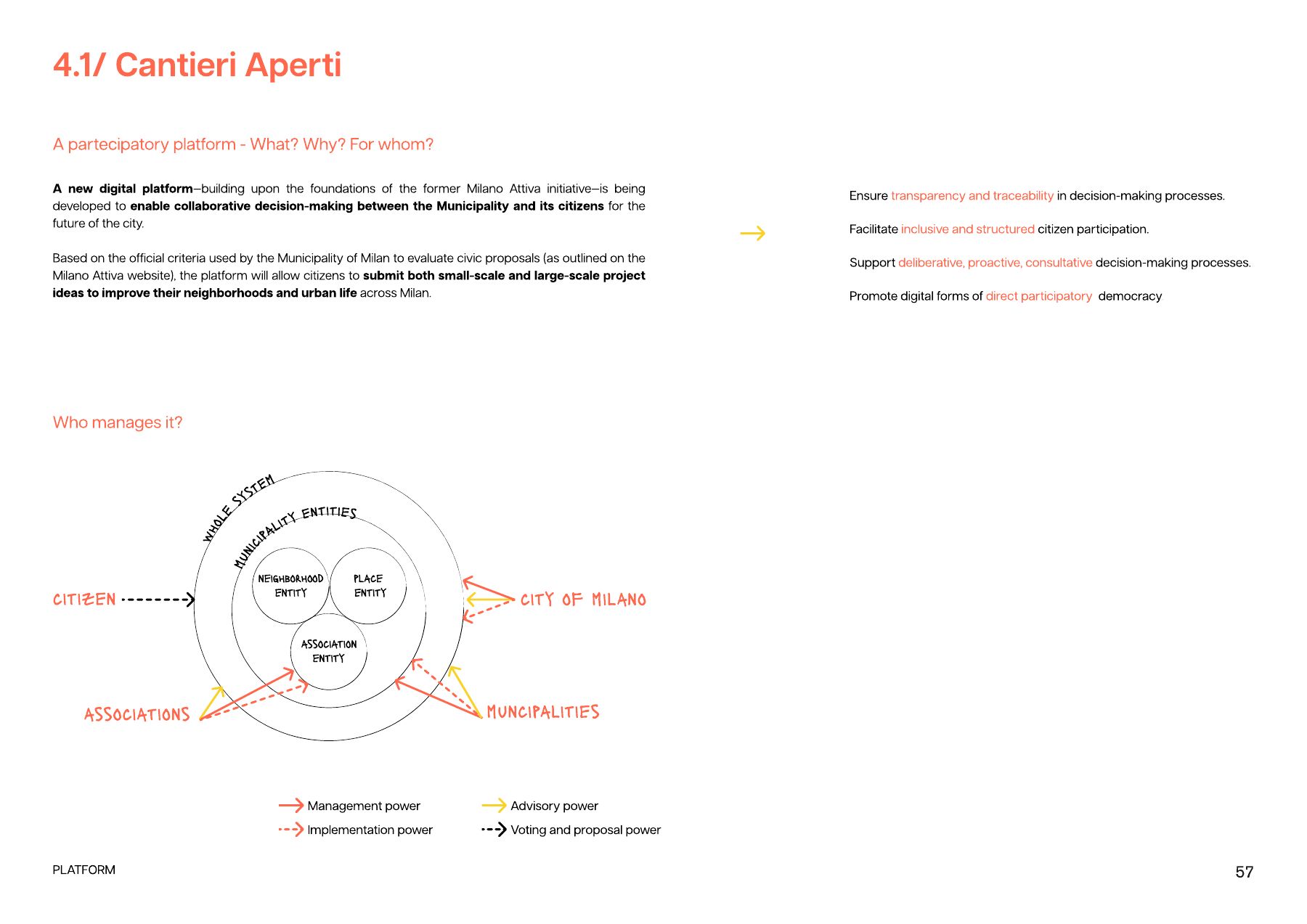
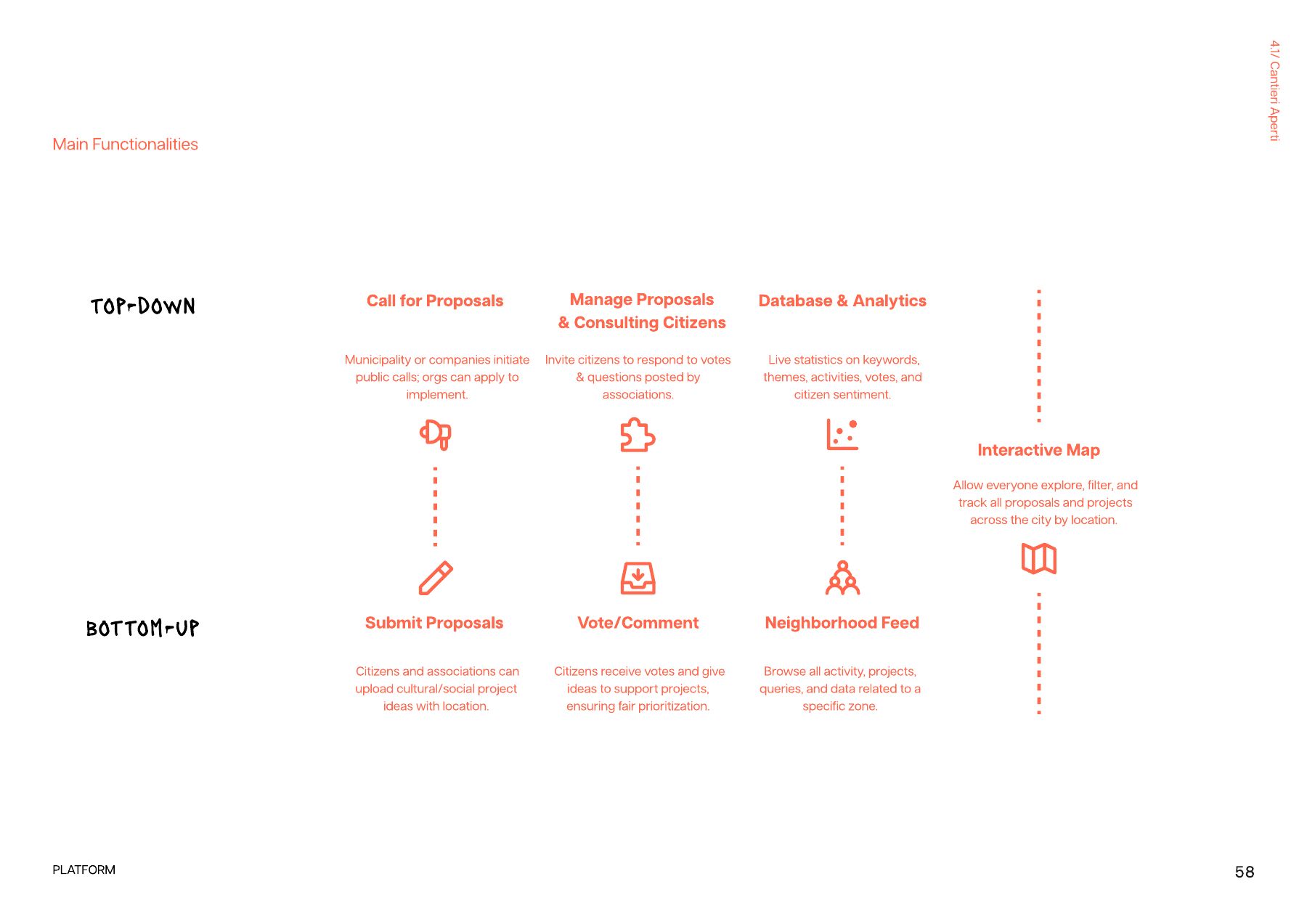
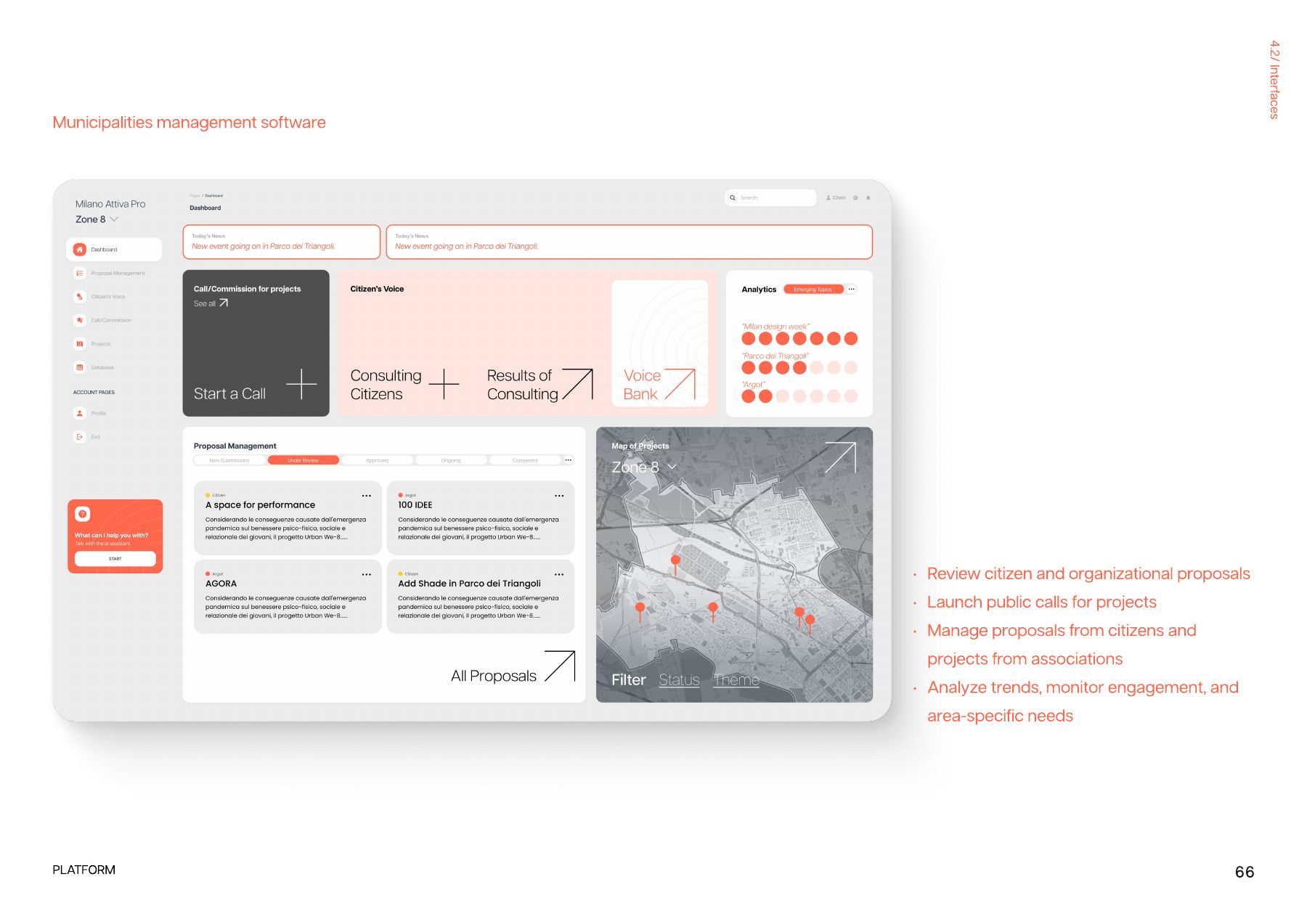
A digital platform for collaborative decision-making between the Municipality and its citizens. Based on the official criteria Milan uses to evaluate civic proposals, it lets citizens submit small and large project ideas for their neighbourhoods.
- Transparency and traceability of decisions
- Deliberative, proactive and consultative processes
- Inclusive, structured citizen participation
- Digital forms of direct participatory democracy
Top-down
- Calls for proposals
- Consulting citizens
- Database & analytics
Bottom-up
- Submit proposals
- Vote & comment
- Neighbourhood feed
4.2Interfaces
An app for citizens, a dashboard for associations and municipalities.
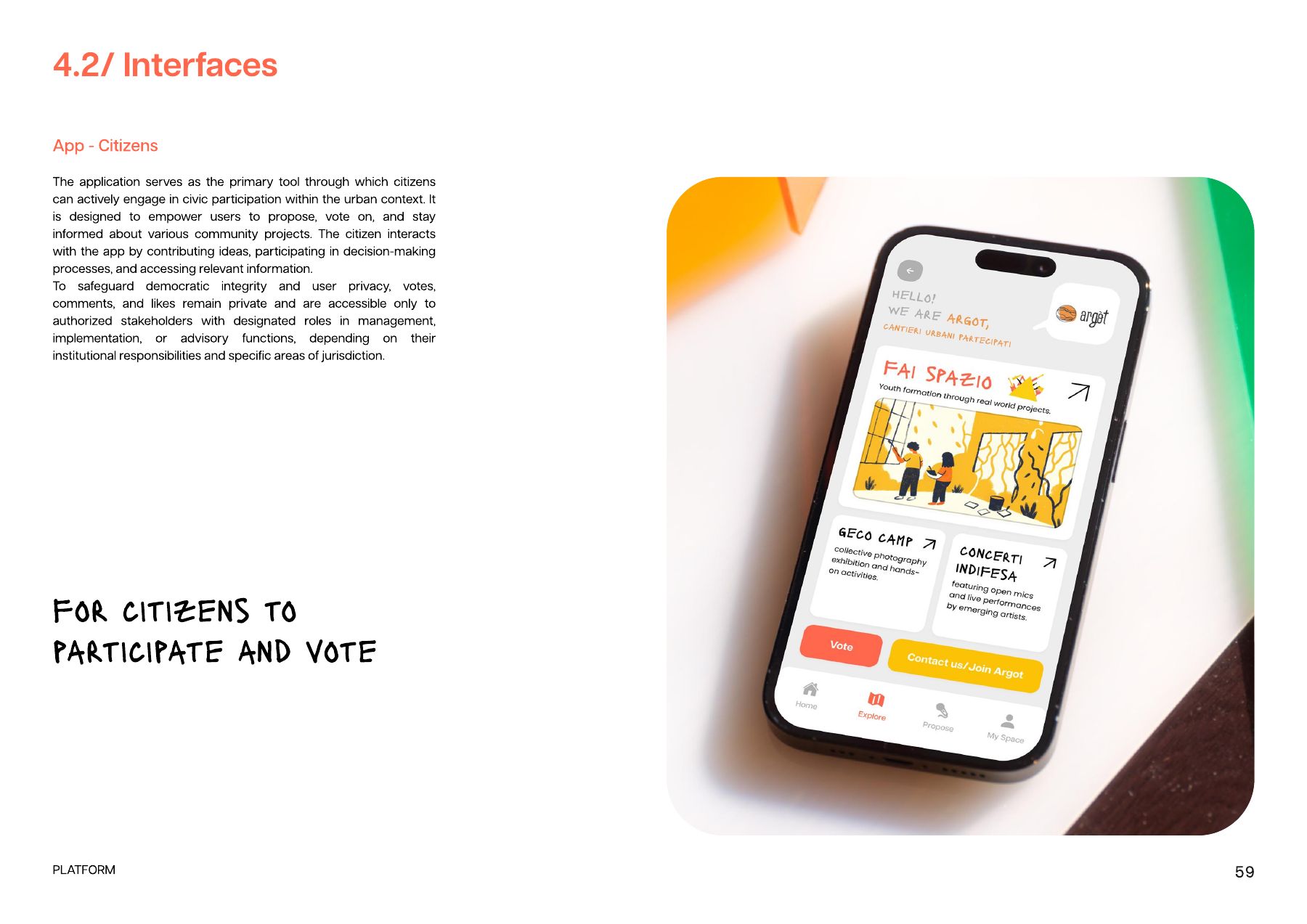
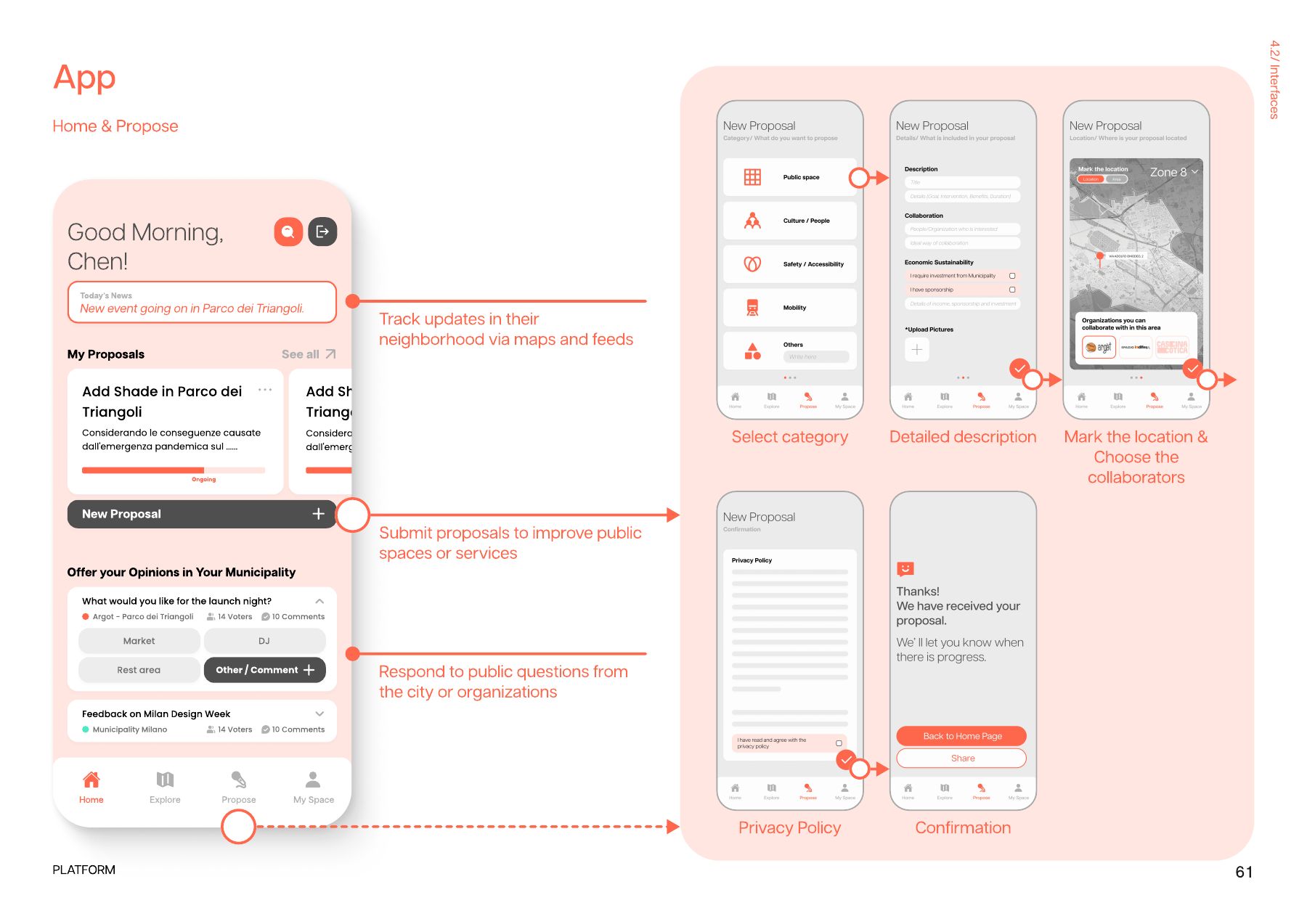
Citizens use the app to propose, vote and stay informed about projects in their neighbourhood. Votes, comments and likes stay private, visible only to stakeholders with a defined role, to protect democratic integrity.
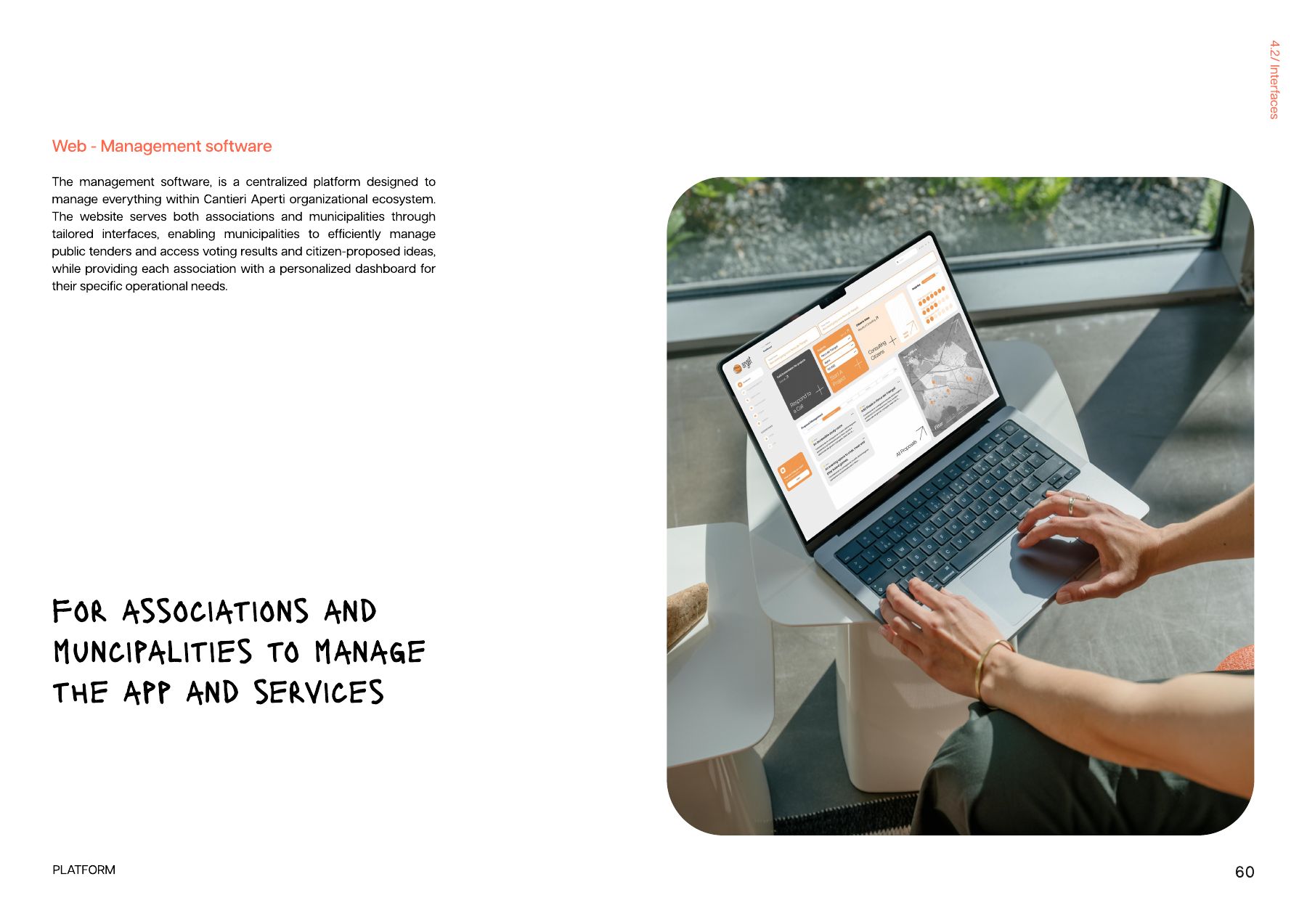
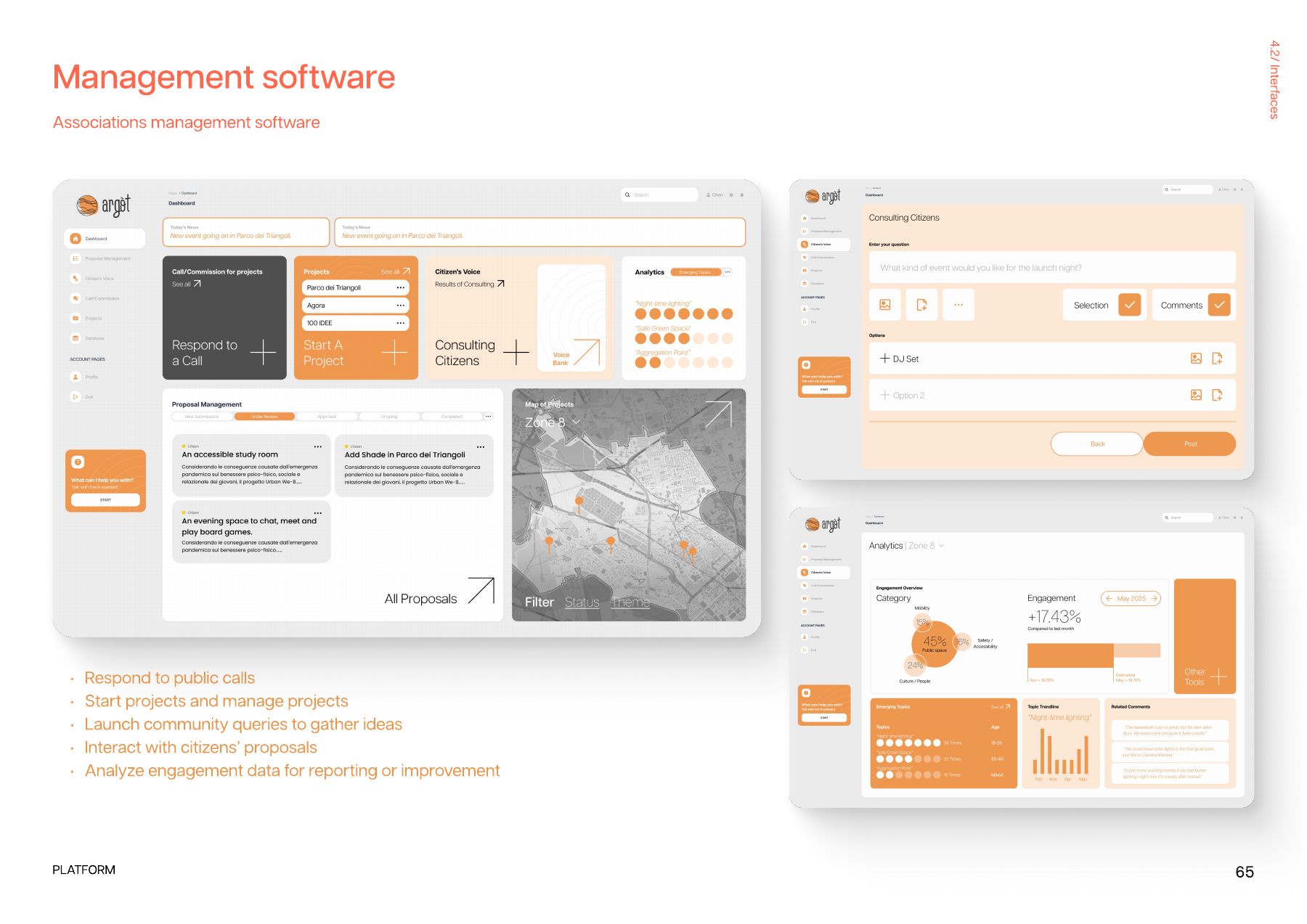
The management software gives municipalities tools to launch public calls and read results and citizen ideas, and gives each association a dashboard to answer calls, run projects, launch community queries and analyse engagement.
4.3Branding
The city as a work in progress.
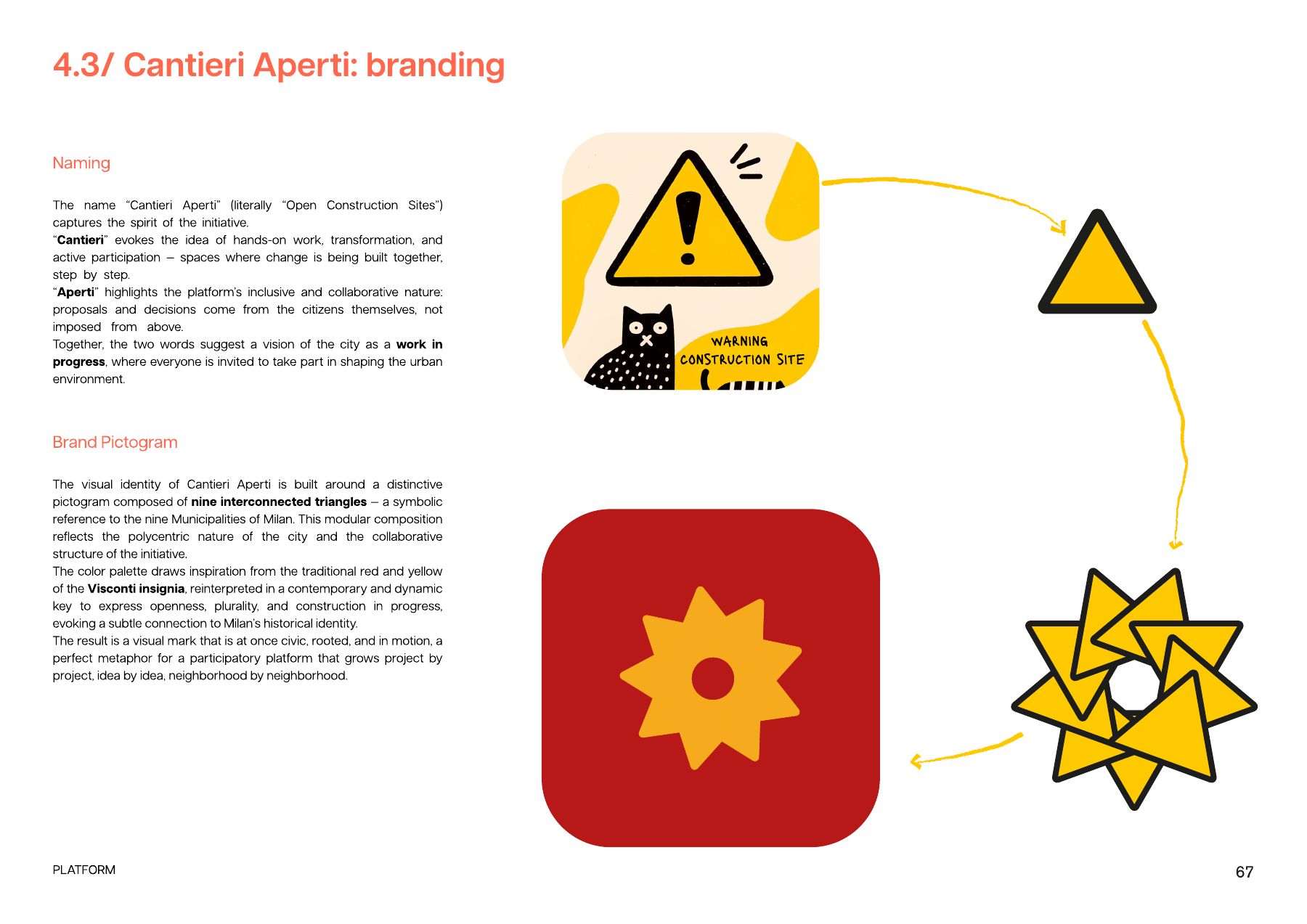
“Cantieri” evokes hands-on work and transformation; “Aperti” the inclusive nature of a platform where proposals come from citizens, not from above. The pictogram is made of nine interconnected triangles — the nine Municipalities of Milan — and its red and yellow reinterpret the Visconti insignia: civic, rooted and in motion.
Le città invisibili
Gibellina biennial