Nora
A wooden fish stall that keeps the catch cool without electricity, for Senegal’s street markets
My first real dive into design. The studio focused on wooden objects for Senegal: research an area of daily life, analyse it and design an object that answers its needs.
1Research
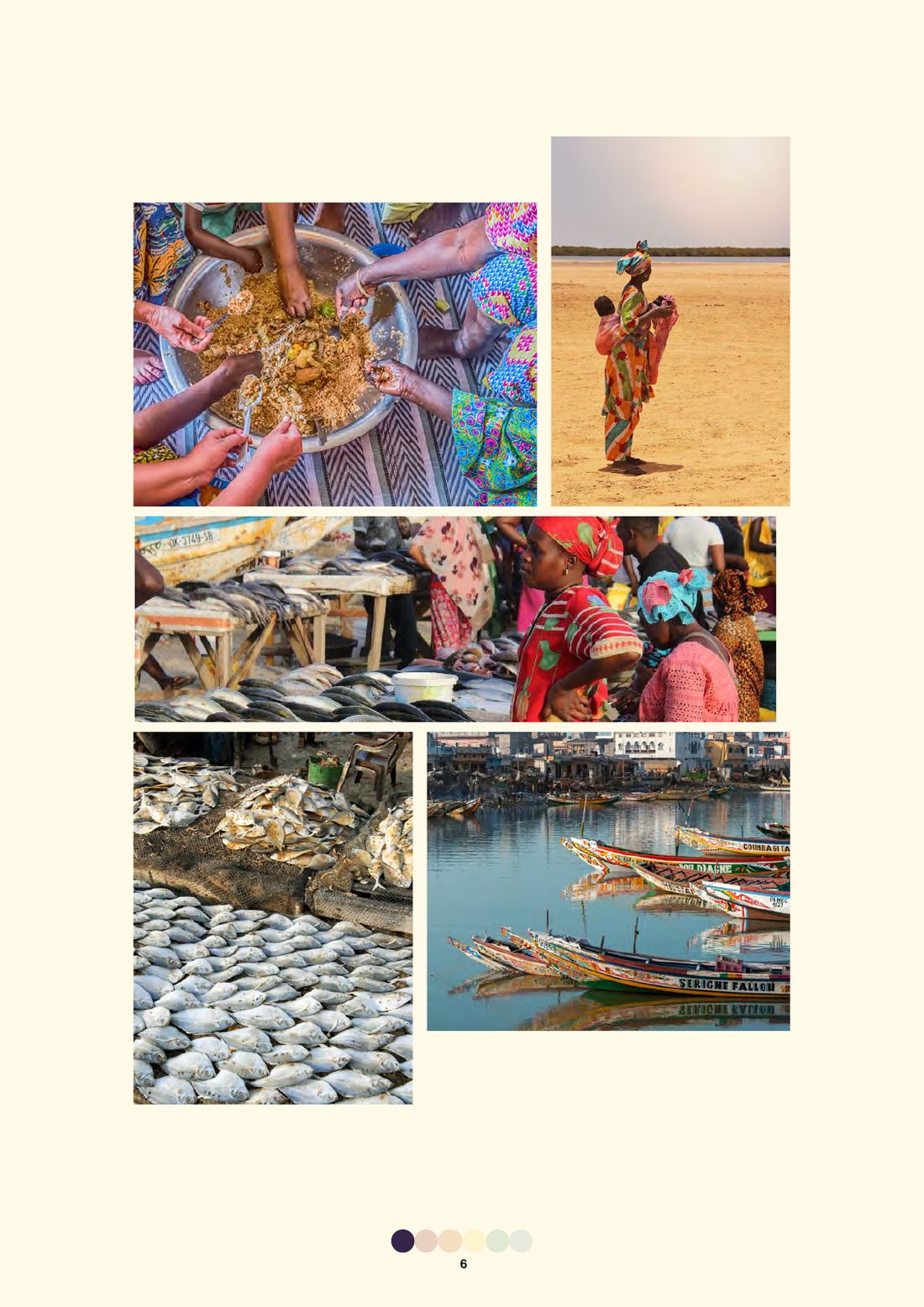
Street fish markets.
Fish is one of the most eaten foods in Senegal, but poor hygiene and the lack of electricity — and therefore of refrigeration — make it hard to preserve. Stalls are makeshift, built from scraps, with the fish simply laid out and exposed to insects.
We also had to work with the types of wood available in Senegal: analysing these materials and their properties was a first, effective constraint that pushed us to find smart solutions.
2The Zeer system
Cooling without electricity.
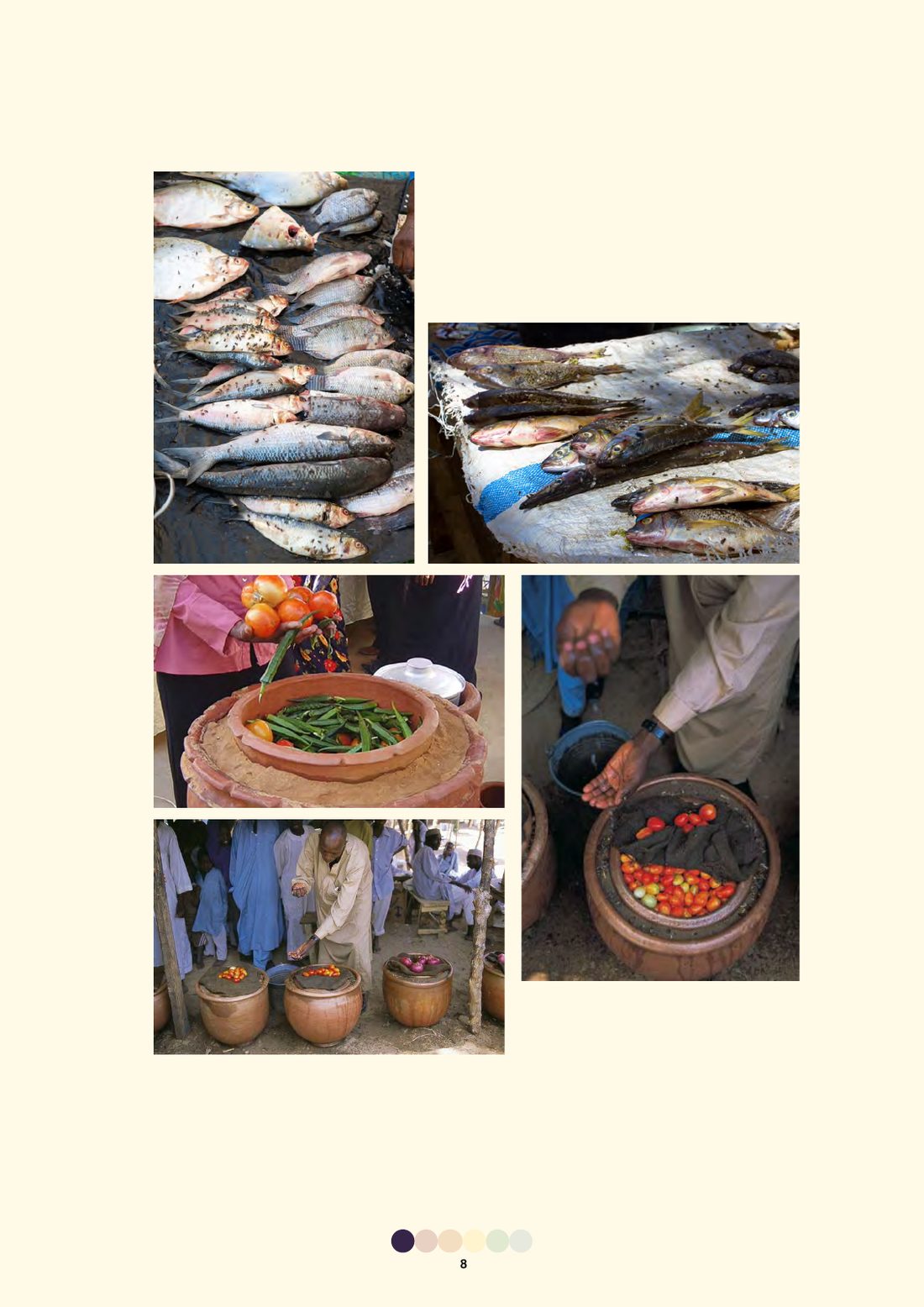
Stalls are usually outdoors, where there is no power, so we needed a way to preserve the catch without it. That led us to the Zeer, a technique used for hundreds of years in Africa and the Middle East that lowers the temperature of food by about ten degrees.
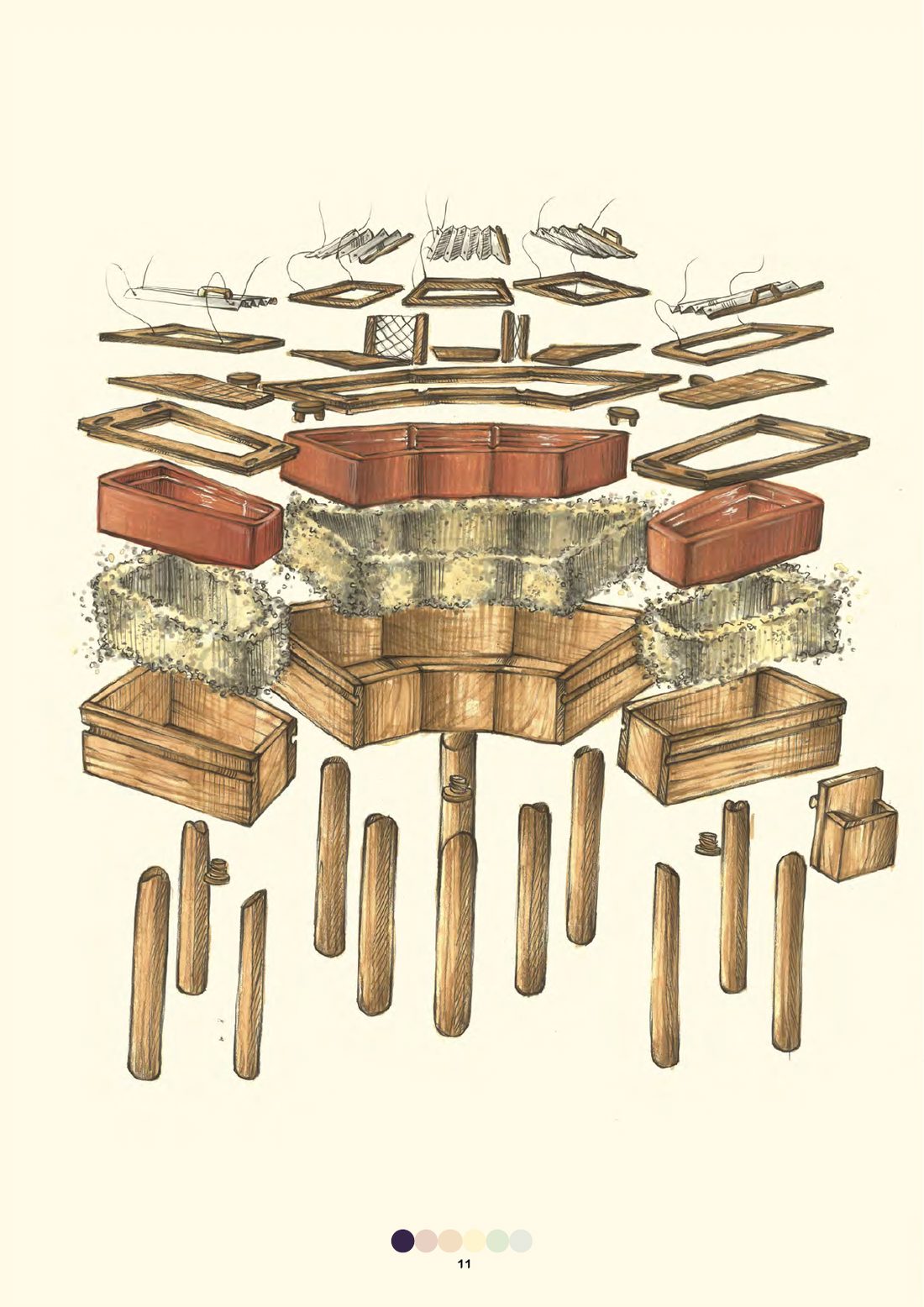
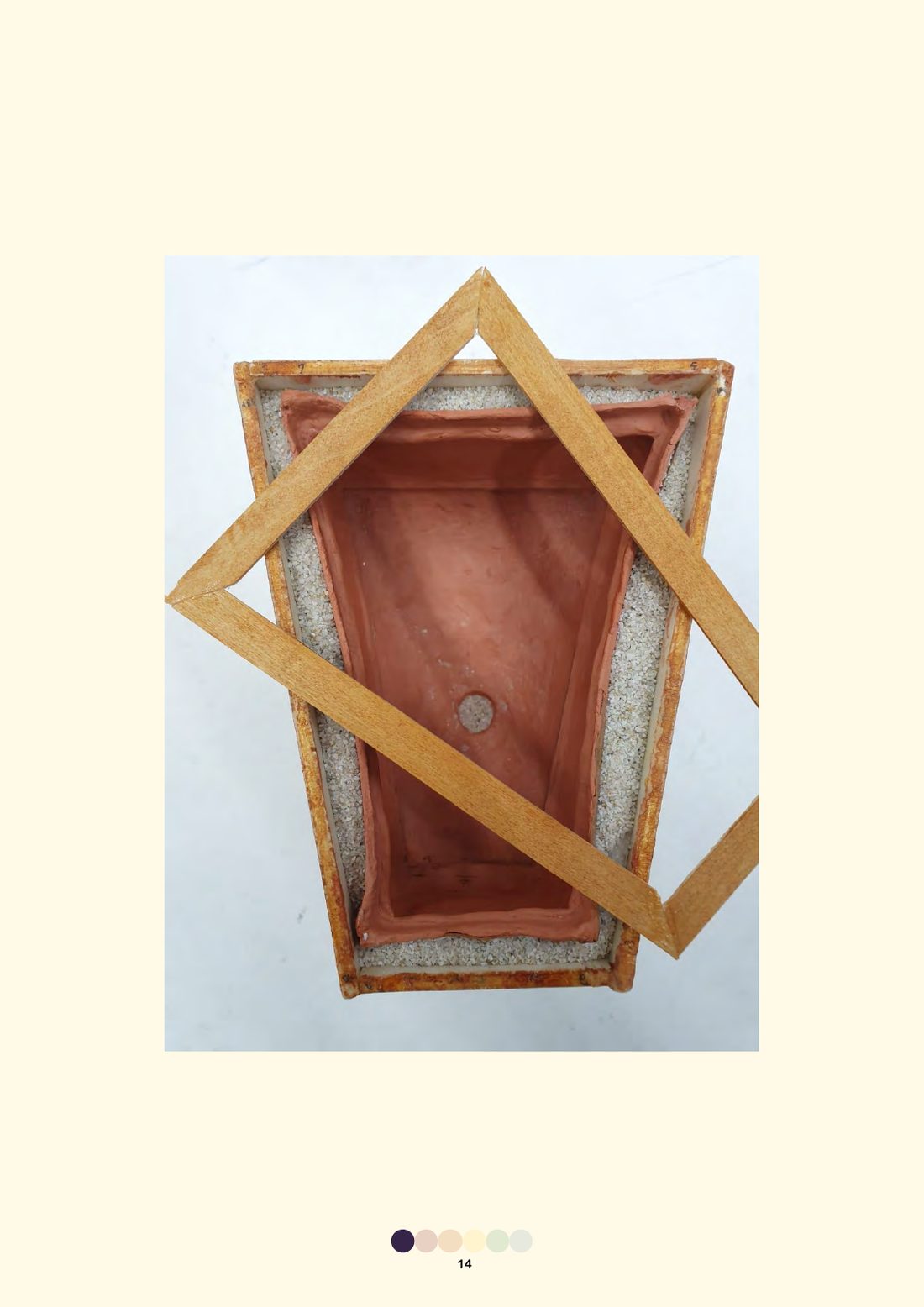
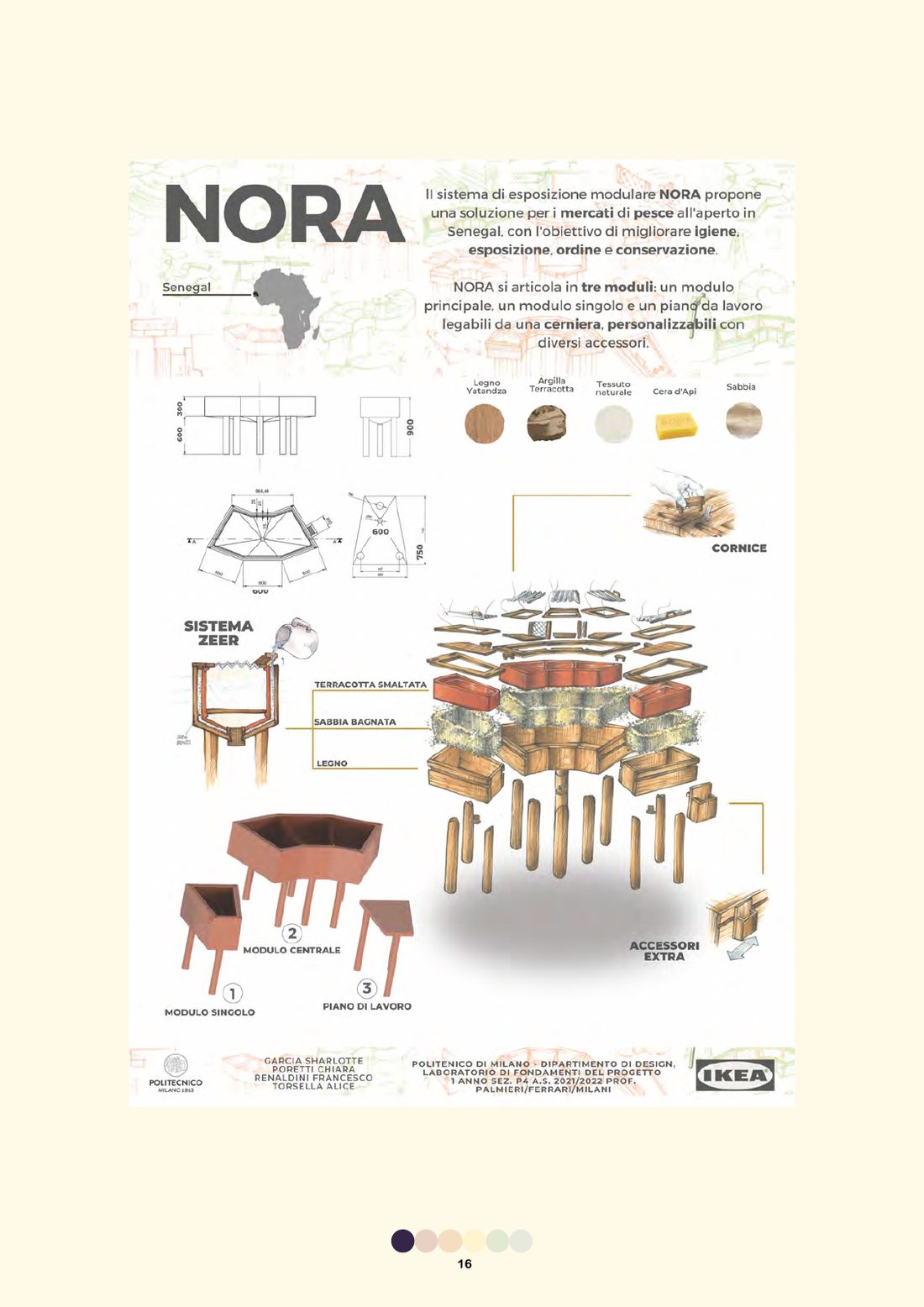
It works with layers: an outer one in terracotta or wood, a middle one of wet sand and an inner one in terracotta. The real lesson was the method — finding a solution to a similar problem in another field and bringing it into your own product. We also analysed a company to pair with the product: IKEA — its positioning, competitors, history and values.
3Nora
Two modules, one cooling system.
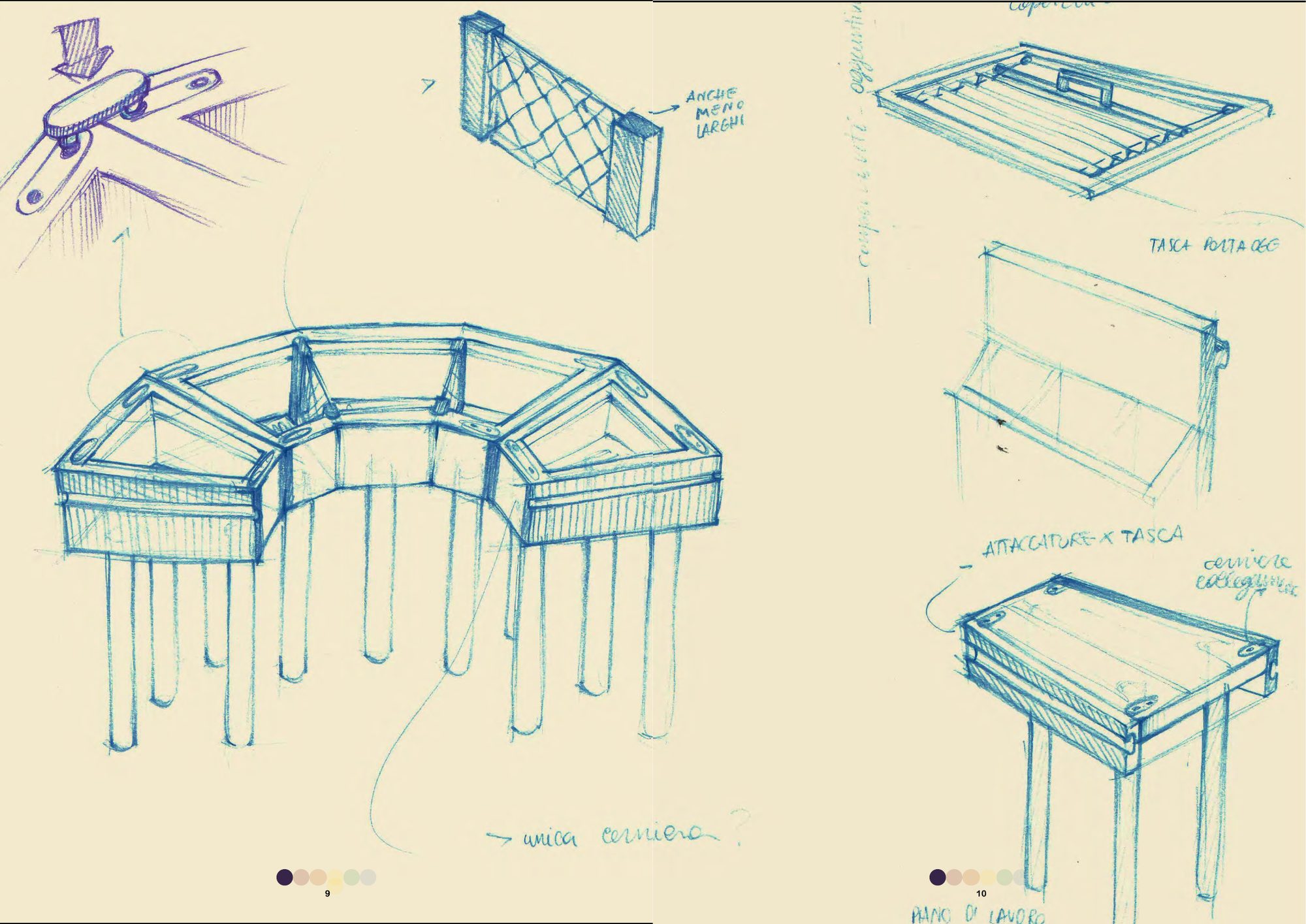
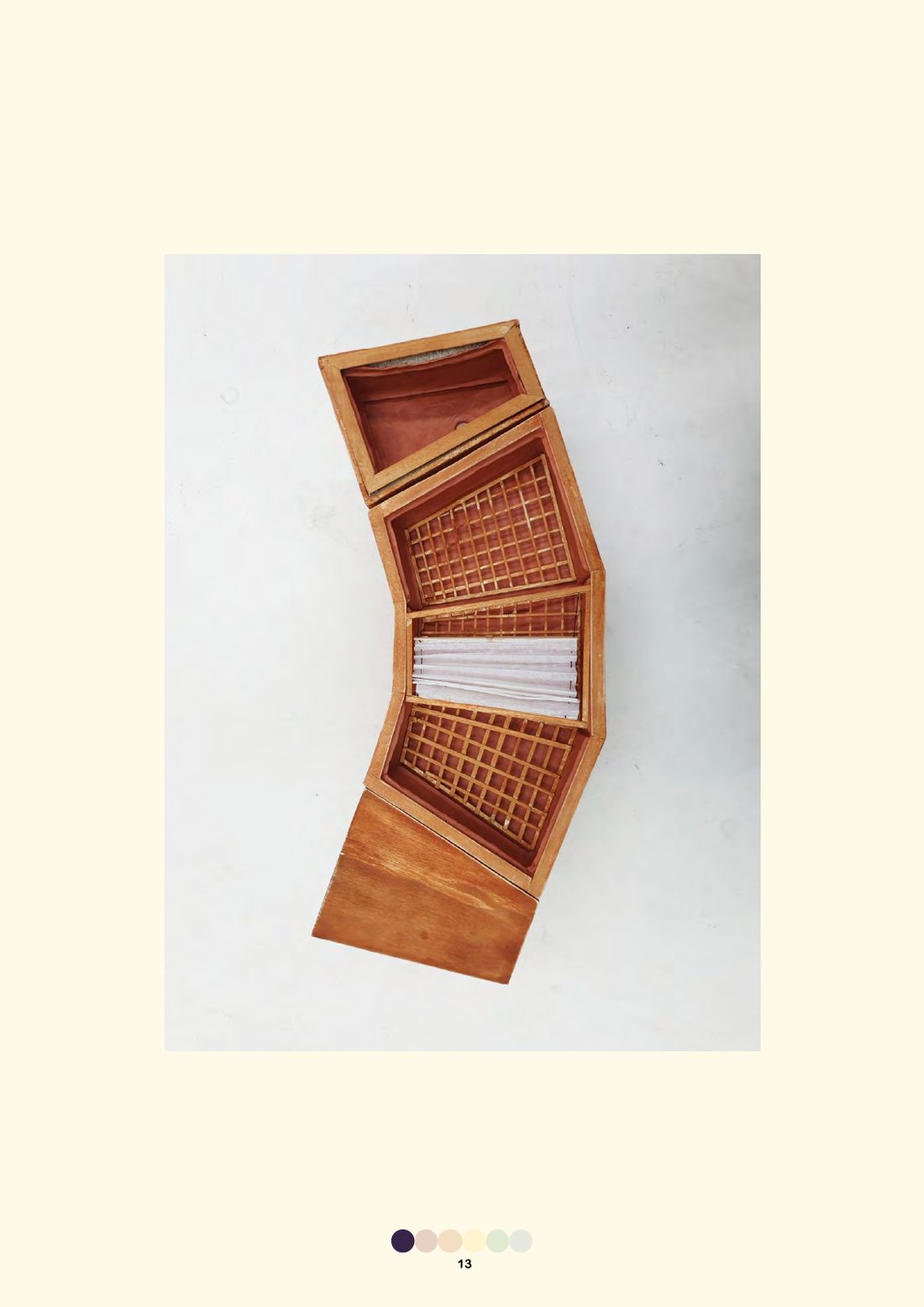
Nora is made of two modules: a large central one and a smaller side one. The exploded view shows the Zeer components: a frame on top can be removed to wet the sand, and a wooden plug at the bottom of each module drains the tank when it is washed.
The poster followed the communication style of IKEA, whose clean lines and graphics were hard to match with the aesthetics of Senegal.
4Looking back
What I would change.
With what I know now, I would drop the distinction between the two modules and base the system on the small one, supplied in several units that can be combined freely. Weight would also be an issue — at the time we agreed with the teachers not to consider it.
The part that taught me the most was making physical models: getting my hands dirty with clay, wood and PVC pipes. Nora was also my first experience of managing a model budget, full technical drawings and a team of four people working at different paces.
Maschera Wed’ze
Ski goggles render